Episode 33 - Loving Like a Mother with Elizabeth Berget
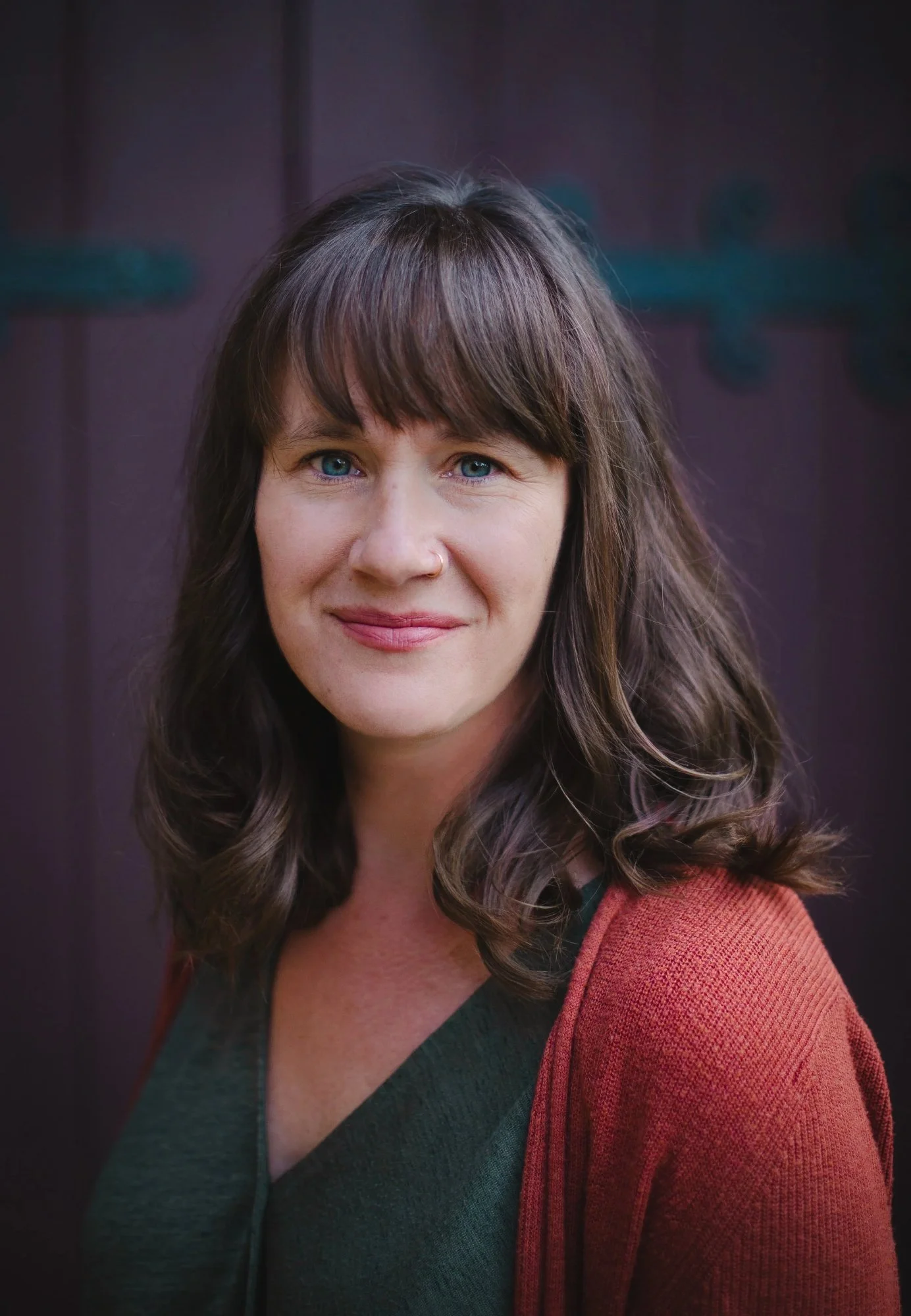
Why are some folks so fearful of thinking of God as Mother? Is it useful to think of God as Mother even for those of us who are not mothers, whether by choice or circumstance? How can maternal imagery for God help us through loss, longing, and grief? Join Anni and author Elizabeth Berget for a conversation around these themes and more.
Listen to full episode :
Transcript
Hey, welcome back to season three of Barely Christian, Fully Christian. I'm Anni Ponder, and I'm super grateful to have the gift of your attention and time.
This season, we're diving further into conversations about what it means to love Jesus, to call Christianity to be better than it is and a whole lot more like Jesus, and to embrace the feminine aspects of God. I'm so glad you're here.
If you happen to be tuning in for the first time to Barely Christian, Fully Christian, may I suggest you actually go back and start with episode 0.
There's a lot of information in there that will help lay the foundation for the conversations currently ongoing. Not saying you have to go back and listen to all the episodes in between, but that would be a really great place to start.
Friends, my guest today is someone I am so delighted to introduce you to. The title of her new book, Had Me at Hello, she has just emerged with a beauty called Love Like a Mother, How the Sacred Work of Motherhood Reveals the Maternal Heart of God.
This, of course, like any author's new offerings, is only one aspect of Elizabeth Berget's beautiful, luminous self and I look forward to you listening in as we explore all of the beauty to be had in finding maternal imagery for God and in who we
are. So welcome, Elizabeth. Thanks for being here.
Thank you for that lovely introduction. I'm always excited when I get a chance to talk with you.
Well, that brings me to how we know one another because I always like to say where we got connected first.
And yeah, thanks to the algorithmic magic of the internet, someone connected you to my work and about the same time, Substack offered me up a post of yours.
And so we have been in conversation ever since like, oh my goodness, you are exploring the same territory to me too. And so it's been really a joy to get to know you. So my question though, this is a fun one that I like to play with.
If you and I showed up at an exercise, like maybe you do yoga or water aerobics or whatever, but pick your favorite venue, right?
And we were gonna get a little exercise and I came up to you and maybe we were next in line to one another and we started chatting because we had something in common.
Then I'm curious what you would say that would help me get an on-ramp to who you are. How do you introduce yourself to a new person that you're just getting to know? Where do you, where do you begin?
Yeah, I mean, it's probably cliche given the title of my book, but I usually begin with motherhood.
I, you know, that's I think my primary hat. And even though I wear a lot of them and I probably tell you about my kids, they're 13, 12 and nine.
Um, and yeah, I think some other identifiers for me, I guess depending on where this class took place, but I would tell you I live in Minneapolis and being in this part of the city is a really big part of my adult life and I love living here.
And I'll tell you about my husband, Eric, my dog, Penny. And I, I would probably tell you, I mean, okay, to being honest, I would fill any weird silent gaps with like weird animal facts. I'd probably like pull something like that out of my hat.
But assuming we didn't have, I have like a whole story about male anglerfish that I think is fascinating. And most people are like, oh, that's we're talking about this. Okay, great.
But I, like I think one of the biggest things about me is that I, I love water. I love being in water. I love being around water.
I love kayaking and paddle boarding. If I can be swimming or doing laps, if I can be at the beach, I'm a happy girl. So I live in the land of 10,000 lakes and I love, I love that about where I live.
So yeah, I think those are some, some of the mean, I mean, I could go on and on, but those are some of the, that's, that's the intro.
Okay. Well, I'm trying not to fangirl over here too much because I would have so many curiosities about the male anglerfish. I too collect weird animal facts and I too noticed that most people in my periphery are like, why are we talking about this?
I'm like, because it's amazing.
Why are we not talking about this?
It's hilarious and it's fun. Yeah, exactly. But that just nothing you've said surprised me so far.
The water connection, we have so much in common there. And reading your book, I have been just delighted to find the way you show up is playful, and you're really funny and witty and then deeply serious and profound.
And these are all qualities that I like to ascribe to myself as well. So this is just me feeling affirmed when I see qualities in you that I like about myself. So we're all mirrors to each other anyway.
Yeah, thank you.
I always tell people like, I hope I'm my therapist's funniest client, I hope I'm my friend's funniest friend, and I'm not, but I like to pretend I am.
Absolutely. No, you totally are. I can verify and vouch like I've done the research.
Well, your book, baby, is about to hit the market. We're recording this before its birthday, but those of us privileged to be hosting you on podcasts and things have had a chance to get an advance copy.
And so I just want to say hearty congratulations on this project that I know has come from so many places in you. And I just want to wish your book a happy birthday.
Thank you. Yeah, it's been a long gestation. I'm excited to deliver.
So yeah, yeah.
Well, I'm excited to see what she changes in the world, because as our good friend Kim Eckhart had said, we've been reading through Dr. Elizabeth A. Johnson's She Who Is, classic feminist theological tome.
And we've been really enjoying it. But Kim said recently, it's a beautiful book and it's also really academic.
She goes, if there were a young mother who needed some form of sustenance, I don't think I'd give her that book in the middle of her raising her very young children, but I sure would hand her like a mother, because it feels cozy and companionable and
so relatable and your language is so very carefully inclusive of people. I just really appreciate that about you, how you will name a thing and then say, and if this doesn't fit, I don't mean to exclude these folks over here and your experience might
be different. It's just so gentle and it's so beautiful too. I mean, I hold it up here for the people watching on the internet. Look at this beautiful, colorful cover with all the animals in the forest at night, with this glorious moon.
Just don't want to read this just based on the cover. I am a fan of judging books by their covers.
I'm thanking you for these kind words. Yeah, the design team at Braswell's Press, my publisher and the illustrator, they hired Lucy Cartwright, just knocked it out of the park. They did an amazing job.
That is not my skill set even a little bit. They did a great job.
Which is why it takes a team of midwives to bring something this beautiful forward. Okay. So I told you before we clicked on that I have one question for you.
This is my one question and then we'll see where it goes. So you have been in the, what do you call this, like the promotional period of the book, talking with podcasters and people who want to help get your book out into as many hands as possible.
And so I'm wondering if there's a question that so far, nobody's asked you or we haven't asked enough that you're like, oh, I really hope to be asked about this part of this process, because there's something here that I would love to talk about, but
I'm trying to think.
That's a great question. Two things come to mind. So I'll kind of list them out and then we can go from there.
I think one of them is like, why does this matter? Why does it matter that we know God is mother in scripture? Why does it matter to women?
Why does it matter to men? Why does it matter to the church? Why does it matter to kids?
That's something I've spent a lot of time thinking about. I think maybe on one other podcast, we talked about that, but I don't think we, I feel like, why pick up this book? Why does it matter?
It's something that we've talked about.
It's a really good question. I love that question.
Sure. The other thing that comes to mind is, you mentioned the gentle inclusivity of the book, which high praise because that was really a strong desire I had in writing it, is that people would pick up on that vibe.
It was really important to me to include mothers whose paths have looked less traditional, so mothers who've experienced infertility or loss at various stages of the game, as well as mothers who have fostered or are fostering and or have adopted.
And so I don't really feel like I've gotten to talk as much about those.
You know, that the book really traces the experience of motherhood from, you know, pregnancy to labor, to birth, to the way you nourish your baby and protect and comfort your kids and draw them to rest.
Kind of just these universal experiences, but these, I don't even want to call them outliers because I do feel like they're pretty universal. But these was really important for me to include those stories as well.
And so I haven't I don't feel like I've gotten to talk quite as much about them.
Okay, because thank you. I love both of these. Let's try to come back to one and start down here.
Put a pin in it. Because I have so many dearly beloveds in my life who have either chosen not or not been able to become mothers in any fashion.
And I think there's so much richness that you weave into this book that is accessible and relevant even to people who don't have that as part of their story.
Yeah.
So, okay. But I want to travel that first road first.
Sure.
Yeah.
That's great.
But now I'm realizing my train has stopped. I'm in perimenopause. So this happens all the time recently.
That's fine. No, we've stopped and we're not at the station. Tell me about the first path again.
Why does it matter?
Why does it matter?
Yeah. Yeah.
10:58
Godʼs Maternal Heart
Okay. So great question. And I get this one a lot too because I do so much work here in similar territory, right?
You really do a great job of grounding so much of this in scripture and coming from tradition and history and pulling these things out.
And a question that comes to me often from beloveds and people far away is like, why, like, who cares if you have feminine imagery for God? Like, have you looked around and seen the real problems we are facing?
Why are you spending so much energy here? Why does this even matter? How does it even help?
Are you just feeling left out and so you're like sore about it and you're salty and you're like, okay, thank you, I hear you. I would love Elizabeth to hear, what do you say when you get that pushback? Yeah.
And it's interesting trying to sort of put forward an idea on the wilds of the internet because anybody who's done this for any amount of time goes, like, keep saying the same things.
I feel like I've been saying the same thing for almost five years publicly now. And you do just feel like you're just beating on the same drum. And well, even if it's something you're wildly passionate about, right?
And so yeah, I think there's a lot of different directions I could go in answering this. We could look at current events, we could look at headlines, we could look at what's happening with who's leaving church, who's coming to church.
I mean, there's all kinds of reasons why this matter, but I think, you know, it matters first and foremost because I think without exploring feminine imagery for God, without recognizing the maternal imagery of God that is right there within
scripture, we're shortchanging God. We are doing God a disservice. And I think for anyone who calls themselves a Christian or who calls himself a person of faith or a follower of Jesus, that's the end goal, right?
It's like, we want to know God well so that we can live like God wants us to live and live in that light, live on that path.
And so if we're sort of shutting out or overlooking or ignoring what I think is a significant component of God's character, we're missing it. We're not doing a good job.
And so I think for a lot of people, some of the resistance I faced in this work is, oh, you're just making God in your own image as you said, Anni, like you feel left out or you are adding to or taking away from scripture.
Like we read warnings against in Deuteronomy and Revelation. And I would pose the opposite to say, when we're ignoring these, we are removing parts of scripture from our everyday speech.
Or when we are ignoring these maternal images for God in scripture, we are making God in our own image and it's a male image. So those are some things that kind of come to mind first.
But like, I think, you know, women and mothers are, I mean, they're my primary audience for sure. And they're just also who's kind of nearest and dearest to my heart and my work.
And, you know, I think there's a real issue we face when we can't see the feminine in God. We can't see God in the feminine. We don't see women as fully divine image bearers, even though we say we do.
And I think that has all kinds of horrible ramifications. If you follow that to its logical end, as we see in these headlines of women being abused in various ways, it devalues women when we can't recognize the feminine in God.
So yeah, short change is God. I think it devalues women. And then, you know, I could keep going.
But like, you know, for men too, I just think, you know, we were facing this epidemic of toxic masculinity. That's such a buzzword these days. And of course, of course, I mean, I will be the first to say it isn't all men.
I know some great men and I'm not a man hating person. Like I am married to a man like that. I love deeply.
Right.
But in this broader cultural context, where some really itchy things are being perpetuated by men, especially against men, especially against women, I think knowing that God is like a mother just expands what it means to be a follower of Christ,
expands what it means to be a full, whole healthy human being made in the image of God for men as well. I could keep going, but yeah, I've got more to say, but keep jumping. I'll just keep going. I could talk to a wall, Anni.
I could just keep going. So you got to interrupt me.
You have landed in my favorite pool. This is where I swim all day, all every day. This is what I'm studying and what I'm putting out on the Internet.
But I'm curious what you would say about this aspect of it, because I see the same things like, hey, if we're going to cut off part of God's nature, then we've cut off part of our own because we look at God and we're like, oh, made in your image,
okay. And so we're really super cramping, disabling, separating ourselves from ourselves. But here's where I'm really curious today.
What do you think is behind the pushback that we constantly get on the Internet and in real life about the possibility of exploring feminine aspects of God? If even if we're careful not to say, I'm saying God is a woman.
Like if we're not even going anywhere near that, but we're just like you do in your book. The sacred work of motherhood reveals the maternal heart of God. Why do you think that is so terrifying to some folks?
16:44
Overcoming Resistance
Yeah.
And I have a lot of compassion for those folks, because even 12 years ago, I would have probably put myself in that camp. So I have so much empathy and patience with people who have a lot of red flags around this, because I get it. I do.
I think I would say, I think some of the resistance, first and foremost, comes from just unfamiliarity. We don't talk about this.
Most, a lot of us in Western Christianity, I think this is a little bit more familiar in like Orthodox traditions, but in a lot of Western denominations, we're not talking about the maternal aspects of God.
And so you grow up in church, you go maybe 10, 20, 30 years, and then suddenly you hear this idea and it's like, well, I've never heard this before. This is new. This is unfamiliar.
And we as humans, we don't like change. We don't like unfamiliar things. And so I think that's part of it is we have not historically highlighted these aspects, so they're unfamiliar.
And then I secondly, I think, or I guess piggybacking off of that, I use the word orthodox in the sense of tradition here, but it is Christian orthodoxy.
It is Christian tradition from the last 2000 years that God is spirit, that God is not male or female. So it's not fair to say God is a man. It's not fair to say God is a woman.
God does not have the chromosomes or the body parts to be male or female. God exists above our human categorizations and language for God. Our language is just attempting to know God through metaphor.
God is a shield. God is a shepherd. God is a rock.
God is a father. God is a mother. These are all ways that we are attempting to understand and puzzle piece together, this whole picture of God.
As you pointed out in Chapter 4, I think, your favorite metaphor for God from, was it Hosea?
God is maggots. So let's just be real careful here. We're attaching too much to any of the scriptural metaphors because it's not meant to be literal.
Right.
Right. It's literary, right? It's trying to help us understand who God is.
And so I say this on page one of the book that people from John Piper, very conservative, to Richard Rohr, not conservative, agree that God is spirit and that God is not a man. And I just think that's something we're not familiar with.
So there's fear around that. And the second part of that, and this is something I've experienced personally, like in the last 10 years, certainty is really safe. When we can say, this is true, I stake my claim on this is true.
And we kind of close, we put our horse blinders on to like other options, like there's a lot of safety and security in that.
And so if the idea of God's maternal heart in scripture is new and jarring, it takes a lot of work to open ourselves up to new ideas. We're just, that's just how we're wired as humans.
And so I think some of the resistance just comes from unfamiliarity and I mean to be like, I feel like the biggest pushback I get on the Internet especially, and some of this is like block and be blessed people because they get violent and angry, but
there's some people who really thoughtfully engage. And it's, well, God is father in the Bible. And it's like, of course. And percentage-wise, these maternal images, they're not huge.
It's not like half and half, and I'll be the first to admit that. But I think what might be helpful for people who are feeling that resistance is to say, hey, when we talk about God's maternal heart, this isn't an either or.
We're not just chucking father. We're not elevating mother above father. It's this expansion.
It's can we get to know God a little more fully? Can we root those understandings in the scripture that exists and pay a little bit more attention to those overlooked passages? I don't know.
I think that's and it's fair. Like I said, I get it. I think if people really spend time, I mean, in my book and in the Bible, they're going to see, oh yeah, this is when we look at the Bible with a maternal lens.
This is not a huge stretch. This isn't like coming out of nowhere.
Right.
I get the sense from knowing you and also reading your book, that you have a deep, deep love of appreciation for and dedication to Jesus, which I think many times, just being able to hear that allays some fears because there's this hardwired,
especially for those of us rooted in fundamentalism and evangelicalism, that anything unorthodox in that sense, anything not from us, is going to lead people down a slippery slope. And you're going to be first, you're going to think this thing and
then that, and then pretty soon you're going to walk away from Jesus. And so, I think it's really necessary or helpful or good or so, it's a thing, to be able to connect to, oh, I just really still love Jesus.
All these years later, I've gone through various iterations of decolonizing and deconstructing my faith and it looks different now than it did. But Jesus has been here the whole time and is not going anywhere.
And I find that when I can work that into the fabric of whatever conversation is happening, we can maybe allay some of the fears that like, oh, I was afraid that you were going to turn into somebody who just walked away from everything.
And there certainly have been many people who have needed to, for great reason, but to express, oh, but I'm still following Jesus. He still walks at me.
I think is really useful, but I wanted to ask if we could talk to your 12 years ago self, if you're able to access her, because I would love to get even deeper into, not asking for a friend. Okay.
I am always considering, how can I help bridge this, what seems like an uncrossable gap between me and people who are triggered by the things that I say? When I talk about the femininity of the Holy Spirit that I see and all of these things.
So I was wondering if I could just use you as an experiment. Okay. Okay.
So 12 years ago, Elizabeth, I know you love Jesus, you're starting your family, you're going through your life, discerning who you are, what are you like mid-20s at this point?
No, I'm 43. I was like early 30s.
Okay.
Early 30s. Okay.
Okay. So we're very similar in age. All right.
So I'm so curious what early 30s Elizabeth thinks might happen if we expand our awareness of the divine. What's the worst-case scenario?
Yeah. I mean, honestly, the worst-case scenario for me and even now is like I would lose my faith. Like I've had four decades on this earth, more than four decades that have over and over and over again, embedded me in the reality that God loves me.
There is a greater purpose to our existence here on earth and that we are connected to one another. Like that reality has just been underscored for me so many times that the idea of losing that, it's like I would lose myself.
So yeah, it's like none of us want to lose that underpinning that is so true to who we are and so true to how we see the world and our life experiences and so and not to mention like community, you know, relationships that might be marred by that.
And so one of the things that our shared friend Becca Stewart writes about in her book, Permission to Matter, is you don't like if you exactly that like we fear that if we kind of step a little bit to the left or a little bit to the right or a little
bit off off the path we've always been on, it's like, okay, great. Now we're in a handbasket heading straight to hell. Like we can't ask these questions about the feminine nature of God's character with and still remain capital C Christian.
I think there's just a huge fear and that's certainly a fear I experienced. But as I mentioned before-
So it's actually like loss of community then. If I follow this thread, if I think these things, I won't belong.
I won't belong to the community and I won't belong to the me I've always known. I will lose this huge part of who I am that I really highly value. I don't want to be someone who doesn't know Jesus.
I don't want to be someone who doesn't love God. So that was a tension I really held at that time. But then over time, really discovered like, no, this is pretty scriptural.
This is pretty, like, on the path. Like, in fact, I even had a more theologically conservative pastor read an early draft of my book and just asked him to say, he's a pretty open-minded person, but theologically aligns more conservative.
And I was like, what is going to make you put this book down? What's going to raid Fred Flags for you? Maybe I can rewrite it in a way that's more invitational.
And, you know, he was like, nothing, really. This is pretty scriptural. You're not saying anything that's like way out there.
And so I think that there's an assurance there for those of us who either have or are in that space of wanting a more expansive faith, wanting a more expansive understanding of God, but, you know, wrestling with some of the fears that really
Oh, that's really beautiful.
As you've been talking, you've been hearing the words, like if I'm in conversation with someone who's really resistant, or if I'm thinking about myself from decades back to offer, wow, I can tell how deeply you value your faith and how you guard it
and protect it and cultivate it and will not lose it. And that's such a beautiful, honorable thing that we can take a moment and appreciate together. And then maybe when that's established, then find some more common ground that we stand on.
Because I feel the same way. I don't want to be talked out of my faith in Jesus. I actually think he's the very best idea the world can ever hear about.
But I do want to know that I'm not heading in a direction that will cost me my faith, my ability to belong to myself. I really love how you said that because it is a part of me. I've been a follower of Jesus since I was three years old.
If somebody were like, hey, I want you to consider this truth that we can prove, and it's going to blow apart your faith in Jesus, I'd be like, oh, I don't even want to hear it. No, not interested because my faith in Jesus is central to me.
It's the deepest part of me.
Yeah, I really resonate with that. And so, yeah, I just think, you know, there's, these are really valid fears.
And it's, I think, but if we can open ourselves to the Spirit of God being at work and alive within us, and, you know, I think, like, looking at what the Bible has to say and looking at the way that God has led us through life, the various
experiences, the various relationships, like, God is ever actively working in and through us to help us know God better. And so, if we can just open ourselves out of these kind of, like, rigid lanes, we get in to say, wait a minute, I keep having
this experience that's broadening this side. We can trust that that's the work of God in us, you know? I mean, be discerning, be cautious, but, like, be open as well.
And ask good questions. Do your homework. If you're committed to scripture, then open it up.
Let's see what we can accomplish together, you know, not to play too heavily into a metaphor we both like, God with maternal heart.
But this reminds me of how gently and carefully a mother affirms a very real fear that a child has, that the mother she knows is not about to happen, right? Like, so I'm thinking of a time in my, this is funny, you'll get the joke.
In my elementary school years, somebody showed us a video at school or maybe at church about somebody who had a bald head and who also was a murderer. And so they used to show us terrorizing videos.
Dark times in the 1980s and 90s, yeah.
Had to really do some deep healing there. So I saw this, you know, this man and he had a bald head and he was a murderer. And so then I assumed I made that leap.
All people with bald heads want to murder me. Like I made it very personal, right? And so, you know, my mother could see the irrationality.
She could also see where that was rooted and very gently didn't say, that's ridiculous. How stupid, right?
She, she like could come around and hold and make sure that I felt safe before she asked me to do the rational work of does A equal B and E equal C or have you made some kind of a logical error here, right?
And so isn't it true that God is able to do that with all of us, all of the fears that we carry. And when we're presented with a new idea, no, no, no, because that might whatever.
And isn't God able like a mother to come around us and say, Oh, my darling, oh, that looks so scary. You are safe right here. Let me sing over you.
I love that verse in Zephaniah where God sings over us, right? Let me sing you a lullaby. And you just let the vibrations of my voice and my heart, just set your nervous system back.
And then maybe we can talk about how you've made a leap here. And it's not actually like that. But isn't that a beautiful way to think about God holding us?
It's so beautiful.
And I think to remember, God knows our hearts. He knows the desire of our hearts. When I look at me 12 years ago going, is this okay?
God knows that at that moment, the Spirit of God said, hey, I know that your desire is not to stray from me, is not to do wrong. You want to do right. You are a textbook Enneagram one who is always trying to do the right thing.
I know this about you. I know your intent is good. I think we can trust that God knows our heart.
None of us are walking around going, boy, I really hope I offend God today. God knows that about us. He knows that we're trying our best and we're just limited.
One of the things I write about in the book is that period of time where you're trying to teach your kids to wash their own hands, and it's just like a disaster.
They're just knocking soap off the sink, and there's water running for five minutes at a time, and there's way too many pumps of soap, and there's water all over the floor, and you're still like, hey, great job. You're doing it. Good job.
They're terrible at it. They're just terrible at it. You're like, you're doing great.
Yeah. Okay. Don't forget this.
You're just coaching them along, and you know they're not going to do a good job. You know they're trying their best, and their little lack of dexterity is the problem. I think God looks at us the same way to say, boy, she is really trying her best.
Not doing great, but she's really trying her best, you know, and I think we can add, there's just a lot of like that maternal understanding, that bigger picture that mothers have, that God has to say, I see the whole, I see why Anni's scared, even
though it's ridiculous. I see this child is trying their best, even though they're just really doing not a great job. Like God has the same posture toward us, and I think that allows us to have so much self-compassion.
You say, yeah, I was really trying my best, you know, and maybe it didn't go like I wanted to, but I really was putting my all into it.
Right, right. Because God looks on the heart and really does understand our intentionality, and we all know that the road to hell is paved with good intentions, right? It matters what we show up, and we've heard way too many arguments.
Well, I didn't want it. Yeah, well, you hurt me. But isn't it great that God sees and honors our intention, and then is able to come around us and help us with the dexterity or whatever we happen to be lacking?
Yeah, I think so.
Yeah.
33:31
Universal Mothering
Okay.
So now I'm curious if we can go back to path number two and I do remember it, which is a perimenopausal miracle.
Amazing.
Okay. Amazing. So, so many of us have been trained with the idea that, oh, you're a girl, you have these chromosomes, and you've come out in our family, here you are.
Your life is already planned. You're going to be a wife and a mother. Isn't that exciting?
And for many different reasons, that's not the path that we end up on. And so I'm really curious because I'm just thinking of some dearly beloveds who have not walked the path of motherhood, either in body or even legality.
And, and I'm thinking about their faces as I continuously talk about the maternal heart of God. And I'm recognizing like a question. I think it's a question.
Like, is there, have you forgotten about me in this conversation? Did you remember that not all women are mothers? We don't all want to be and we, we can't all be.
And so Elizabeth, what, what are some ways that you have both in the book and in your conversations, um, looked for ways to connect and affirm that question?
Yeah, absolutely. I think a couple of things come to mind. So I'll sort of rapid fire what came to mind as you were asking the question.
But one is that we are all, whether we are mothers or not, whether, whatever our path looks like, we are all born with the need to be mothered. Like biologically, neurologically, we desire a mother.
And there's studies that are done that when a young child's needs are met, especially by a mother figure that sets us up for good attachment later in life, secure. And of course, this does not negate the importance of fathers.
Let's be really clear about that. But there is something unique about a connection with a mother.
And so whether we've had that need beautifully met and we have a thriving relationship with our mothers or had a thriving relationship, whether that's been fulfilled or whether it's a gaping wound, that need like all other needs is best met in God
alone. And I think so for people who are thinking about this book, who maybe are not mothers, I think learning about the mother heart of God fills that need that we all have from start to finish in life.
And then I think that another thing that comes to mind too is, I like how you talked about how especially in societally and especially in churches, it's like, okay, yeah, you grow up, you get married, you have kids.
And I think there can be some really Icky vibes with the trad-wise movement. I just want to take a little aside and address that.
Because when we talk about the sacred work of motherhood, it can kind of conjure up these images of floral dresses and homemade everything. And God bless you if that's your path. And if you feel called to that, amazing.
My kids eat a lot of Doritos. It's just the reality of things around here. And so at the same time, I make sourdough.
I have a garden. I mean, I think we're such complex creatures. And so when we talk about the sacred work of motherhood, I mean that in the most grounded, my kid threw up in my hands.
I got an epidural. I did a natural birth. Whatever that spectrum looks like for you, okay, it's sacred because it's hard work and it mirrors the love of God that God has for us.
So I just want to make that super clear. Like when we're talking about motherhood, it's a spectrum. It's like most things, it's a spectrum, right?
Yeah, and it does not even necessarily mean or have to mean.
We don't have to confine it to children that you are in charge of. It can be mothering the children in your neighborhood. It can be mothering a book into the world.
It can be taking care of, nurturing, protecting, forming, loving. You can mother just about anything in this world.
You took the words right out of my mouth. Exactly. All of us are involved in some work of mothering.
Maybe you're caring for aging parents or people in your community. Here in Minneapolis, we had Operation Mutt's Research where so many families were vulnerable. The work to take care of those families was the work of mothering.
Do you have enough to eat? Do you have shelter? Do you have clean clothes?
Do you have medicine? It was just this really embodied care. It's labor.
All of us. It's labor, exactly.
Let's look at that word for a second.
So let's not discount that. Let's not discredit that. That counts too.
And then just to bring the ship home, I've meandered a bit here.
But with people whose path toward motherhood has not looked like they wanted it to, or maybe they've chosen against it, whatever it is, if you are someone who finds yourself without children, biological or adopted, something I believe so strongly and
I really tried to embed in the book is this idea that if I think from the moment maybe somebody decides they want to be a mother, they want to have children, you're a mom. Once that kind of desire takes hold, I'm going to start crying.
Once that desire rests on your breastbone here, you're in. Then whether you end up with a baby in your arms or you don't, like you are still someone who is a mother, who wants to mother, who mothers in your spirit, in who you are.
There's just such a sadness when that ends with empty arms. There's such a loss, there's such an ache there.
And so I spend a whole chapter, chapter four, talking about how loss and longing are just threaded through mothering, whether we are her or we know her. Everybody either has or knows someone who's lost a baby or who hasn't been able to get pregnant.
These are really hard realities. And I think it's hard to say, oh, God mothers in that sense, God mourns, God yearns, God longs, because we serve this God who knows the future, right?
Who knows all things, can do all things, can do everything by the outstretched arm and his mighty hand, right? So it's like, well, if God wanted to have a baby, God could have a baby. I'm speaking glibly.
But I do think there are stories in scripture, specifically Luke, numbers are not my strong suit.
I think 14 or 15, where we read about the lost sheep and the lost coin, and the prodigal son, the lost son, where we see this yearning, this frantic searching that I think is really compelled out of a parent, a parental, a maternal heart of, I want
this thing in my arms. I want this thing close to me, that I think sort of gives a nice response to the stories of infertility in scripture.
Which there are so many, I had not recognized until I saw you list them on the page. And I was like, whoa, this is a major theme.
Yeah. Right. And it's like all these matriarchs, like all these women of like power, you know, the main players, the starring roles, so many of them struggled with infertility, but they all eventually had children.
And I think that can be so hard for women whose path has not been that.
So what I did in the book was I interviewed multiple women who had had that struggle, or who had lost children at various stages of pregnancy or after, because I really wanted those women to feel seen in theirs.
I mean, I'm writing as a white woman in the Midwest of the United States.
I've had this little set of experiences, and I'm obviously not going to be able to speak to what it's like to be one of color, having a mother, what it's like, you know, it's like, so I tried to interview people who'd had some different perspectives,
Yeah.
Yeah. Wow. That's really, I really appreciate that intention and action that you took because it really came through so strongly for me.
And yes, the thread that you pull out here that seems so important for us to consider right now is the intertwined nature of love and loss.
And that no one understands that more than, I mean, I just wept when I was reading about one woman scraping snow off of a tiny little tombstone. And there is, yeah, I run out of words here. Yeah.
And I think for women, especially, like, you know, for my own loss experience.
Yeah.
I mean, my husband was sad.
He was invested. But I, I was carrying around, I hope trigger warning, like I was carrying around a deceased baby. So my body did what it needed to do with that loss.
And like, there's just this embodied nature to having period, to masturbation, to being bright.
Like, there's so, we just carry it in such a physical, visceral way that certainly not discrediting the grief of fathers, but there is something very all encompassing about the grief that mothers can experience.
Our mutual friend Collette, first who I have to thank for kind of initiating me into so much of this territory here. She writes a lot about and actually was a guest. She was my first podcast guest a few years ago.
And she had written a blog about the maternal nature of God. And so we got connected and I was like, we've got to talk about this. And so she's a woman who's not been able to have children, she would share.
And so I was curious about, well, how did you find your way into this territory where you're seeing, you know, God is mother.
And she will share it's about her experience of grief led her to recognizing she needed something akin to a mother to help her hold the grief.
And that is again, not to exclude the power and the beauty and the, just all of the gifts that masculinity has to offer, but that's not the whole picture.
And so in her deep sadness, she was compelled to seek out something that Carol Lynn Pearson, my matron saint who thank goodness is still with us at this moment, writes in her poem, The Motherless House, she writes the phrase, I bury my face in
something soft as a breast. Because in grief, in times of intense sadness, mourning, bewilderment, I want my mom. My earthly mom has not been here since 2009. And you want to know a fun little surprise from her.
I put on my jeans this morning, I reached my hand into the pocket and I found a penny. And I was like, oh, curious what is on this penny. It was 2009.
And I just said, mom, I miss you. It is not the same without you. And I feel the same about Mother God.
It's, you know, I really believe this is my own personal take. She's been here the whole time. She's been embedded in all of our scriptures and practices.
And, you know, if we dig, we can find her. And that we heal when we come back to the integration of our theology. And then also, when we do the internal work of integrating our own feminine, masculine energy.
And then I always want to say, I realize that gender is like this wide swath of a rainbow spectrum. And I don't want to leave out anybody who's like, hey, where do non-binary folks fit? Like right here in my heart, too.
But there is nothing like the comfort of a mother. When I am deeply sad, that's what I reach for. Yeah.
And we see that, like, I mean, I live just eight blocks from where George Floyd was killed, and duty call out for us, he was dying, his mother, and we see that over and over again.
I think it just speaks to that hard wiring we have to be mothered, that we have from day one. I love that you said it's hiding in plain sight. Like I, or maybe you didn't use that phrase, but that's a phrase I've used that.
In fact, I'm getting a tattoo about that very theme next month. Yeah, but just this idea that I do truly believe that the maternal heart of God, the maternal aspects of God's character are right there in scripture.
We just haven't had eyes to see them. I think we see it in nature. I think we see the cycles of the moon and menstruation and the way trees die and come back to life that kind of echo menstruation.
I just think there's so much, I mean, we call it mother nature. I think there's so many signs of how God mothers us in scripture, in nature, in our own experiences that I do really believe it's been hiding in plain sight this whole time.
I will say this too, sorry, to double down on my point. These are not new ideas. They are not new.
I talk about this in the book, but there's multiple examples from the Middle Ages, from people who were following Jesus just a few hundred years after he was on Earth, that really celebrate, not just acknowledge, but celebrate the maternal aspects of
who God is, God as mother. Maybe it's been hiding in plain sight, maybe in other times it was a little bit more noticeable, more celebrated, but we've lost a lot of that.
I love to find these little jewels buried in history. I have this story where I was asking, and I don't necessarily recommend this practice, but once in a while I'm like, Jesus, I want to hear straight from you.
Can I open up this book and can you speak to me from the page that I happened to open up? Not endorsing, whatever, but this has been my practice.
So one day I was wanting to hear from God and this was at the very beginning of my most recent awakening to the motherness of God. I was wondering if I was walking into heretical territory.
I was really cautious that I might develop some thinking that could lead me totally astray. Stand on the slippery slope, the whole thing. I was very nervous.
But I was like, God, I want to hear from you. Can you please? I opened up this book of beautiful mystical poetry from six voices from the East and six from the West.
We've got Christian mystics like Saint Teresa of Avila, and Catherine of Siena, and John of the Cross, and then we've got Rumi, and Rabia, and Mira, and these beautiful Sufi poets all in this one book.
I opened up to a section I had largely ignored before. It's by Thomas Aquinas, with whom I have a beef because of some very misogynistic things that he is reported to have said.
He has expressed some vitriol towards women, which was the water he was swimming in, and he never, well, I don't know, maybe he did. I don't have record that he ever repented from that.
Sure.
I had largely ignored this section of his poetry because I'm like, I don't want to hear from you.
Not my fave.
You don't even think women are equal humans, right? Yeah. But there was a poem written by him, and I opened it up, and it was about God, our mother.
I began to weep because it was just like finding the penny in my pocket, the same feeling, oh, you are speaking to me right now. You are illuminating my path. You are nourishing me with tiny little bites of goodness, just like a mama does.
Even through the mouth of somebody who said really rotten things about women. Sure. You've come shining through like a mother.
How have we not known this? Yeah.
I think that's one of the main bedrock themes laced throughout the whole book is like, if we have eyes to see, God's maternal care is everywhere.
One of the examples I use is I'm holding my toddler, who is just utterly beside himself about putting on pants or something or the other, and is railing against the reality of the cold weather we live in, and I'm just holding this toddler, let's take
deep breaths, let's get a drink of water. But I'm there as sort of, I'm not matching his energy, I'm just kind of here and does God not also do that for us when we're just becoming unglued about something, or right now my whole life is washing
baseball jerseys, which are inexplicably white for some unknown reason. So I'm scrubbing the stains, pre-treating the stains before I throw them in the wash, and I'm thinking, you are making me new.
You are in the interest, God, of restoring all things, of making everything the best that it can be. That is the arc that we're on.
And so I just, I really, truly believe that in these really, these moments of minutia, we have just constant reminders of how God is working in us, how God is working in the world and how God loves us.
Beautiful.
Yeah.
51:14
Childrenʼs View
Well, I have one more question.
Yeah.
This book comes as your youngest child is, what did you say?
Five?
My youngest is nine, almost ten.
Almost ten.
They're so old, Anni.
They're so old. Okay. So you're at this point not doing the toddler thing anymore, which if anybody listening is doing the toddler thing, like we just send you so much love and strength and light.
Just please take a nap if you can.
Please have a nap.
Yeah.
And if you live near me, I will hold your toddler while you do.
We'll go look at worms.
Whatever we need to do. Yeah.
Yeah. Oh, it's so much. Oh, those years.
But Elizabeth, I'm curious how this book, A Baby of Yours that you have brought into the world, how your human children are regarding it. What's their experience of this process for you?
Oh, it's interesting. I mean, they, okay, I've got like a two pronged answer. One is that they, I mean, they're just excited.
They sense how much work this has been. I mean, I've just been like not as available to them the last couple of years as I had been prior. So, you know, they're definitely excited.
I read them the passage in the book that correlates with the dedication to them. When the physical copy first arrived at our house, and my oldest goes, oh, that's pretty good. I was like, okay, thanks.
Okay.
So, you know, they're excited.
I think they, you know, they get the sense that this is a big deal to me. You know, I think they're also ready to have me back a little bit. You know, they're a little, they're a little tired of me being as busy as I have been, if I'm being honest.
So just trying to balance that.
I mean, I think one of the most convicting things about writing this book is like you're writing this book about motherhood while actively mothering, while people need dinner, you know, while people need to be driven to practice.
Sorry, my phone was going off.
Yeah, while people text their mom while she's doing a podcast.
Like, okay, wow, like I am. It's really a lot. And like they have gotten some of the best of me and some of the worst out of me out of this process.
So, you know, there's part of that. But one of the most beautiful things is my son, my, my oldest had an assignment.
I feel like this was like a year ago or so where he had to, I can't even remember the specifics, but basically talk about like, what is God like? How do you imagine God? And it was like a written piece.
And his first two sentences, like God is like a father because blah, blah, blah, and God is like a mother because blah, blah, blah. And I was just like, I'm doing it. I'm changing the narrative for them.
I just remember being so overcome by that. Because it's like, like I said, I've been beating this drum publicly for five years. I've been thinking about these things for eight years.
And, you know, no kid wants their mom to be just like overkill about something. So but I just was so grateful that of his own accord, that was what came out of him, that he could see that broadness, that expansiveness of who God is.
And was able to put that in his own words. And so yeah, I think those are, that's kind of my multifaceted answer. I think they're excited.
I really hope these truths are settling into their bones in a way that they didn't for me until I was like 36, you know? And I think they're also like ready to have me back a little bit.
Yeah.
So I think it's a lot, it's a broad spectrum of response and maybe it also depends on the day. So yeah.
Well, bless you and your husband and your beautiful human children as you usher this book into the world. I'm so thankful you've written it. You've beautifully crafted words that live in my heart and put them into.
Your prose is so fun to read. It's so light-hearted and deep and all the things that I've said that I love. And you're just so funny.
So thank you for this whole thing. It feels like a gift to me and also in a much larger sense.
I do believe it helps us expand the narrative and make space for so much that has previously been cut off and disallowed and truly midwifing in the new earth that Jesus came to initiate here and that we've been trying to find our way into.
I think you're doing it, so thank you, Elizabeth. Thank you. Blessings on the whole launch.
I hope it's a big hoot.
Yeah. It's available anywhere. Wherever you want to buy your books, e-book, audiobook format, pick your poison where you want to buy that from, and it's available.
Awesome. Almost available, May 5th.
When I push publish on this, it will already go to your favorite bookshop and get it. Yeah. All right.
For sure.
Yeah.
Awesome.
Thank you so much, Anni. This was such a wonderful conversation.
Thank you, my dear.
Yeah.
Thank you so much for listening. Let's connect. I'm always happy to hear from my listeners and readers.
You can find me at barelychristianfullychristian.com. And now for more of my favorite song by Wynn Doran and Paul Craig, please enjoy Banks of Massachusetts.