Episode 28 - Beyond the Binaries with Gary Alan Taylor
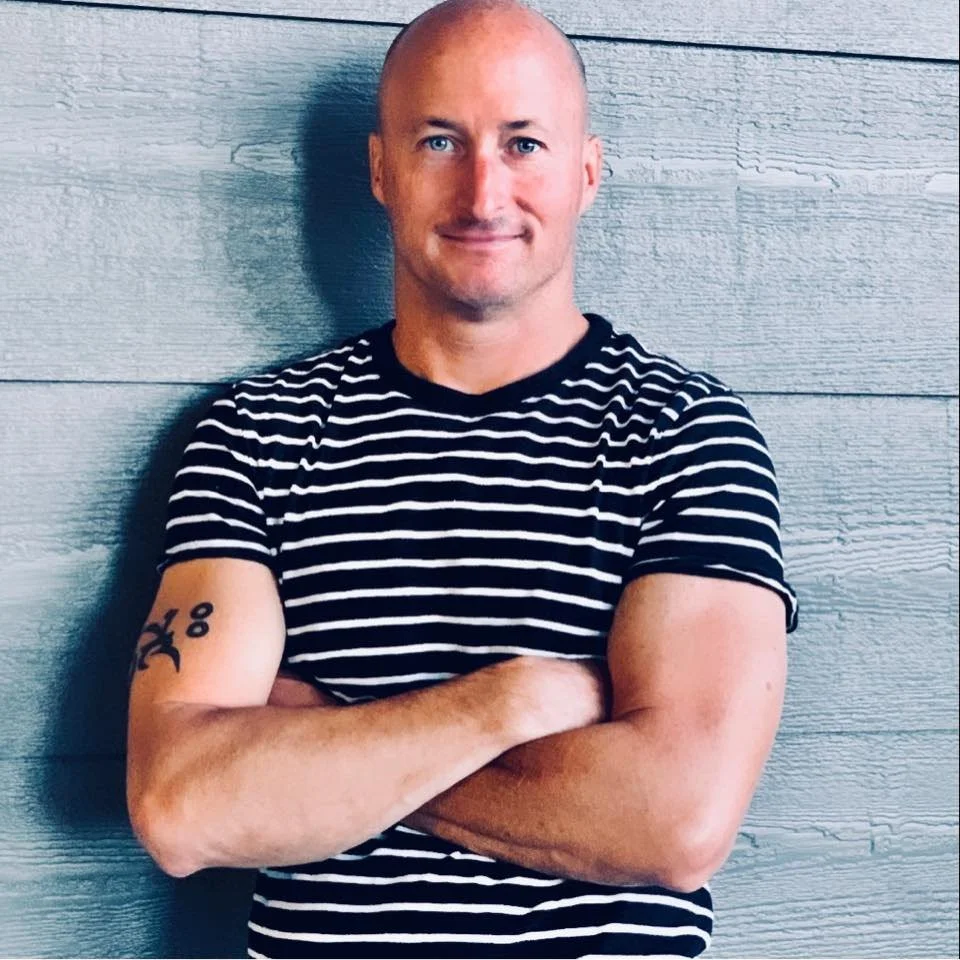
What's one thing we can do to break the spell of divisive thinking? Join Anni and Gary Alan Taylor for a discussion about breaking free from the confines of dualistic thinking taught in evangelical spaces, plus some other pretty useful stuff.
Listen to full episode :
Transcript
Hey, welcome back to season three of Barely Christian, Fully Christian. I'm Anni Ponder, and I'm super grateful to have the gift of your attention and time.
This season, we're diving further into conversations about what it means to love Jesus, to call Christianity to be better than it is and a whole lot more like Jesus, and to embrace the feminine aspects of God. I'm so glad you're here.
If you happen to be tuning in for the first time to Barely Christian, Fully Christian, may I suggest you actually go back and start with episode zero.
There's a lot of information in there that will help lay the foundation for the conversations currently ongoing. Not saying you have to go back and listen to all the episodes in between, but that would be a really great place to start.
It is a rare article that stirs my heart so deeply that I immediately DM the author and say, Hey, I'm Anni. Want to come on my podcast? But today's conversation happened because of just that.
My guest for this episode is a beautiful soul named Gary Alan Taylor, and I'm so delighted to share it with you. Join us as we delve into healing from our fundamentalist and evangelical upbringings, finding out who we are, not just who we're not.
My favorite part of the conversation, expanding past the binaries that can find us and keep us small. So glad you're here. Hi there, Gary Alan, and welcome, a hearty welcome to Barely Christian, Fully Christian.
I'm really excited to have you here today.
Yeah, thank you, Anni. I'm excited to share this with you.
Yeah, it's an amazing thing to be able to do across time zones and geography, to meet together for a sacred conversation.
Let me just start out by telling listeners a little bit about you and how I came to learn of you and the work that you're doing in the world and why we're having this conversation today.
Gary Alan Taylor is the creator and host of Holy Heretics Podcast, a sacred space for spiritual seekers and recovering religious fundamentalists. Hello, that's me.
He spent decades working in evangelical organizations like Focus on the Family before deconstructing his way completely out of white evangelicalism.
Today, Gary Alan helps former evangelicals make sense of their religious upbringing, heal from spiritual trauma, and tap into the deeper streams of spiritual wisdom found in Christian mysticism, mainline faith communities, and interfaith dialogue.
Okay, I just have to underline and start. We've got to come back to the Christian mystics because that's my favorite place to be. His full-time gig is with the University of Colorado where he works in philanthropy.
And you can find his writings and ponderings on his Holy Heretics substack. At holyheretics.substack.com. He has an undergraduate degree from Milligan University and a graduate degree in Holocaust studies from East Tennessee State University.
Wow, hard to know what I want to ask about first. But just so I can introduce you to how I learn about you, to anybody listening today.
So, for the last few months, I have been really enjoying the community of writers and thinkers and seekers on Substack. I kind of needed to get off of other social media platforms for my own sanity.
And so I made my way over to Substack and pretty quickly, the algorithm learned the sorts of things that I wanted to hear about and authors that I wanted to connect with. And so not long ago, what was it? August 29 that you published this article.
I got an article that came across my feed. And it's funny. Do you remember the title of it?
I printed it off, but it did not print the title.
An open letter to the evangelical community, I believe.
Yeah, there it is.
An open letter to my former faith community, something like that.
Yeah. That sounds right. Yeah.
And I was like, Oh, I am here for the conversation about engaging with former faith community. That's a story that I carry in me as well. And so just happened to click, didn't know anything about you.
And by the end of the article, I was DMing you saying, Hey, would you please consider coming on my podcast? Because everything in here, I wanted to have a deep conversation about and highlight and underline.
So, yeah, thanks for thanks for the time and love and blood, sweat and tears that I know have gone into this piece and the and the other things that you're doing. So really, really happy to have you here.
Is there anything else that before we dive in that you would highlight about yourself or help people understand who you are in the world or something to help us get an on on ramp into the world of Gary Allen?
Yeah, sure. Well, you know, first I would say I'm not an expert on any of this. And I, you know, I truly am a fellow traveler and sojourner coming out of evangelicalism.
I think so much of what we have been trained with, if you grew up in an evangelical world, you were sort of trained to listen to the sage on the stage, to take in, to not trust yourself, to not trust your gut, to outsource everything to someone else.
And so when I started this space with my friend Melanie, we first thing we said is we're not going to do that. Like that's, we just don't think that's correct. We don't think, we think it's harmful.
And so just whatever, you know, I have to offer to the conversation does not come from a place of superiority or of any place beyond just someone who is also on the road toward healing, toward recovering from religious fundamentalism myself.
And, you know, feel free to disagree or poke holes in what you hear today, because I think that's what we're supposed to do.
So thank you for that. I wholeheartedly underline and highlight that notion as well. I've said for a while enough gurus, I've had enough people telling me like the sage on the stage, what to think, how to believe, how to act, how to live.
And now I'm living into this season where the spirits like, let me instruct you from within. I'm here. I dwell in you.
I literally want to transform you from the inside out. And so why don't you let me be your teacher?
So I'm a little bit allergic to the notion that we need to, you know, sit at the feet of experts only and do as they say in instead following the invitation of Jesus to recognize the kingdom is within.
And it's from there that our heart, being the wellspring of life, can nourish us and guide us. And, yeah, God lives in us. We're houses of God.
So, right.
Yes, exactly.
Thank you. Thank you for also living your way into that truth and being here to teach from your own journey, which I think a really, really powerful way to live.
So my first question is, as I'm just getting to know you, Gary Allen, Gary Allen, you go by both of your names. Love it. I wonder if you would talk just a little bit about Cher.
How did you journey from fundamentalism and evangelicalism? What were some of the questions maybe, or the burgers in your saddle, or how did it work that you came to where you are now?
Yeah. It's funny. I feel like telling this story, I change it all the time because I remember things or mis-remember things, but I would say that the impetus for my faith deconstruction really began in the back of a car ride.
I was the Senior Director of Christian Worldview Studies for Focus on the Family, which is triggering for a lot of us. But at the time, that's all I knew.
It's the world that I grew up in, it's the world that I was groomed in, and so I was in the world of apologetics because in the evangelical world, it's all about, at least from my perspective, certainty and getting the right answers and this sort of
intellectual ascent that's not really intellectual at all. And so I helped create something called the Truth Project, which was a global sensation for Focus on the Family. It was a Christian worldview curriculum.
And one of the lessons within the Truth Project was called the American Experiment. And, you know, this was way back in 2006, 2007, something like that.
And it was sort of a precursor, I believe, now that I've been able to kind of put the dots together to the Christian nationalistic movement.
It was an entire lesson within this big Christian worldview curriculum about American exceptionalism, about how America is great because America is good, and America was divinely blessed by God to carry out God's will in the world.
And I happened to have worked on a Ph.D. in American history, and I knew that was a lie. I knew that America was not good.
I knew that America was an empire doing what empires do.
And so I happened to be sitting in the back of a car on the way to go and do this conference with the conference director, and I asked him a question about American exceptionalism, and how I knew it was wrong, and how I knew that the entire notion of
American goodness was really a myth, and a legitimizing narrative that allows America to do what we do on a daily basis, which is to dominate, to subjugate, to colonize, etc. And this person that I looked up to, who was in the front seat of the car,
responded in a pretty vitriolic, shameful way. And that was really kind of the first, I truly remember sitting there going, I'm being lied to. And if you are lying to me about this, then what else are you lying to me about?
And that really began kind of the slow unraveling of beginning to think for myself, beginning to stop outsourcing my spirituality to others, who claimed that they were way ahead of me but really weren't.
And so I started asking questions to myself about patriarchy, about whiteness, about the connection between the evangelical world and white supremacy and imperial religion, purity culture, sexuality, gender issues.
And all of those really kind of pointed me back toward a very simple thing, which was the life and the teachings of Jesus, and how so much of my life in evangelicalism had nothing to do with Jesus.
Jesus was very much used and reduced as sort of a scapegoat, as the guy who got you into heaven, as the person who took on God's wrath. But we didn't really talk about what Jesus lived for, what Jesus taught about.
It was just, it's sort of like the Nicene Creed. Born of a virgin married, died under Pontius Pilate, right? His entire life silenced by a comma.
And so this entire sort of dialogue really began. And I left focus, not because of that, but there were inklings of deconstruction being sown in my life.
I was able to then go back and work at my alma mater, Milligan University, and I reconnected, sorry, this is a long story, but...
Oh, please, keep going.
Okay, you can just tell me to shut up.
But I reconnected with my former ethics professor, Phil Kennison, and really kind of went into his office about once a week and just sat down and asked him questions about what does it mean to be a Christian in America?
How do I take Jesus seriously, et cetera, et cetera, et cetera? And he introduced me to a book called Binding the Strongman. I'm actually writing an article about it right now.
It's a book by Chet Myers.
It's a political exegesis of the Gospel of Mark, where Chet is a scholar and an activist and begins to look at all the ways in which this fleshy human Jesus, who was portrayed to us in the earliest canonical gospel, it's not incredibly theological.
It's not incredibly mystical, like maybe John is or Matthew is. It's truly just this raw, quick interpretation of the historical Jesus.
And that awakened in me just this incredible desire to go back to my roots as a Christian and to begin to really focus on what Jesus cared about, what made Jesus cry, what made Jesus laugh, who Jesus cared for, who were Jesus' enemies.
And then putting, answering all those questions within a modern context and going, wow, we are Rome. The evangelical world is the religious elites co-conspiring, including with the empire. And the outsiders are everyone else, right?
Everyone who is not straight, who is not white, who is not in a patriarchal world, who is not a man. So, all to say, it was a long decades, and I continue to deconstruct my evangelical upbringing. It's still within me.
I still have to sort of recognize it on a daily basis.
I tend to be very, I find that I still have this sort of zeal within me, that the evangelical world gave me of like fighting injustice and really trying to move beyond that into a place of peace and acceptance and of letting go.
But that's a whole other story that I'm not there yet. So, yeah, that's a little bit about kind of the start of my deconstruction journey.
15:10
Ongoing Unraveling
Oh, hey, that is so rich.
Yeah, I have about 12 different places that I'd like to jump off from there, trying to pinpoint them all. In your article, I loved how you said this, by the way, I just chuckled at your nod to St.
Paul, the Apostle Paul in Philippians 3, where I'm just going to read this little paragraph. Oh, this is so great.
So for any Bible nerds out there, or anybody who's raised with the text embedded in your heart, this is Gary Alan's very own translation in his own life of Paul's word.
If someone else thinks that they have the authority to speak to the evangelical community, I have more.
Circumcised in my heart, an evangelical of evangelicals, I was the senior director of Christian worldview studies that focus on the family in regard to purity culture, a virgin until marriage, as for zeal, a missions leader, camp counselor, and a
global apologetics master teacher. But whatever were gains for me as an evangelical, I now consider a loss. And then you get into why.
But that really struck me because number one, I love a good Bible reference and a pun inserted into deep theological thing. It's just like a moment of fresh air and levity there.
But also, as someone speaking from the inside and recognizing how you were so deeply formed and informed by your years in fundamentalism and evangelicalism and how it absolutely impacts the way that you think, the questions you know to ask, the
energy you come into a room with. I wonder if this is the same thing for you as I find myself doing the work of decolonizing and deconstructing my faith, the two go so hand in hand. I think they're two sides of the same pancake.
I find that when I dig down deeper into my history, into the layers of my heart, and I'll let you know I'm a very botanical thinker, as far as the metaphors that I use to describe myself usually have to do with plants somehow.
I'm not all that great with raising plants. I'm learning.
But anyway, so my heart I see is this deep garden, and so I'm digging down layer by layer, and like, okay, I think I've pulled out all of the remnants of evangelical thinking and fundamentalism, and then I get down to a deeper layer.
I'm like, oh, there's a whole other bunch of roots down here I didn't even know about. And so the further I get down into my heart, the more I realize, oh, does this go all the way to my core? Did this?
You know, I spent 30 years in my faith community.
So from the cradle till, you know, till I was a mom of two little girls going, wait a minute, I have some questions that are not welcome here, but I'm going to ask them anyway, and watch how kind of I could relate to the conversation that you had in
the back of the car. Like, oh, I see that when I ask these questions, your face turns some different colors, and I've worried you now. And so, yeah, the process of continually wondering, you know, why do I still think this?
Is that rooted in something I've learned from Jesus, or is that rooted in something I've learned from the empire claiming Jesus?
That I liked how you said someplace in this open letter, the evangelical Jesus is someone to worship, but not emulate, because we were taught to bow at his feet and say his name.
And, you know, some of us were taught to raise hands in worship and others were taught, that was heresy. But to look like you are really into it. But then, yeah, what about the space between born of the Virgin Mary and suffered under Pontius Pilate?
What about everything he said and did? What about that? Aren't we supposed to follow him?
Isn't that the meaning of being a disciple is to become like someone? And so, yeah, I keep finding layer after layer.
I get down just the other day, I was having a conversation with my teenager and she said, I hear what you're saying and I'm wondering, is that because of your roots in evangelicalism? Or do you really believe what you've just said to me?
And I had to go into my proverbial closet for a minute and sit with that. And she actually turned out to be right in that case.
It was rooted in purity culture, what I was telling her, that I've done my best to look at that and sort of take it out and reject what doesn't smell like Jesus. And yet it still remains. So it's an ongoing process.
Like you say, we're still doing the work.
Yep.
100%.
Wow.
Wow. So your journey has been a long one. It sounds like I didn't know how deeply you were rooted there and focus on the family and working on.
Oh yeah.
Big time. Yeah.
Was it the Truth Project? Is that what you said?
Yeah. It was called the Truth Project. It was, I think it released in 2005.
So, you know, it's kind of funny. My wife has also deconstructed evangelicalism and we've found ourselves in the Episcopal Church and she has found herself in a very mystical, religiously vowed community, which is a whole other thing.
But my deconstruction also cost me my livelihood. It cost me my kind of career trajectory as well.
And so, you know, when I look back on, like, my wife doesn't really have a lot of the anger and trauma that I have from, she just sort of left it, you know, like an old cloak, just dropped it and moved on. I didn't do it that way.
I was, you know, let go for the most part, or at least sort of agreed to disagree that it was time to leave a place truly because, you know, I believed in all the things that I think Jesus believed in.
And so there was a lot of pain and a lot of trauma that was also a part of living and working in the evangelical world that I continue to deal with today. You know, people ask me, you know, why are you so angry?
And, you know, and I, okay, that's true. But part of me is like, why aren't you?
But then also recognizing that there is really a lot of trauma there in terms of, you know, I remember at my past, my last evangelical job, I was told that if I came out in support of same-sex marries, I would be fired on the spot.
And so you, for those of us who have grown up in this, who have taken some wounds because of this community, I think there's a self-awareness that we have to have to be able to go, okay, I have been victimized by this community, by this theology.
I need to heal from it. And then honestly, I also need to not cause harm myself in return, because hurting people tend to hurt other people. And part of my public voice has not been great.
It has been like, I'm going to burn this to the ground. And I think there's also a season for that. So, yeah, I don't really know what answer I'm answering right now.
But just beyond to say, there is a level of self-awareness and ongoing work that all of us are required to do. If you grew up in any religious, religiously fundamentalist community, it is just there. It is at the root of your being.
And it, you know, a lot of times you think, okay, I've got it. I've moved beyond this. And yet there it is again, right?
It's the way you show up in the world.
And part of that for me has been a very dualistic understanding of creation, a dualistic understanding of reality, of, you know, all right and all wrong, black, white, gay, straight, good, bad, Republican, Democrat, win, lose, you know, everything in
the evangelical world was a zero-sum game, right? And so that is probably the biggest thing beyond just kind of the ongoing anger of being traumatized that I'm continuing to deal with and learn from is how do I move beyond a dualistic understanding
of reality and into more mystical, nuanced understanding of just the way things are because we do not live in a dualistic world, right? I mean, it's, you know, and all of our former community would say, yes, but you know, it says in the Bible that
God created man and woman and the land and the sea and the darkness and the light and like, yes, these very binary things. But God also made rivers and trees and hills and mountains.
And, you know, not only is that language poetic, it's not scientific, but it is an invitation to look and see everything else God made in the middle.
And so beginning to move away from binary thinking is one of the things that I continue to uncover about myself.
You know, as you said about that conversation with your daughter, it's like, whoa, oh, I'm still living as an evangelical, even though I've rejected a lot of the, you know, the themes here.
So absolutely.
25:28
Beyond Binary Thought
Wow. I'm so glad you brought that up because that's the proverbial word on my street. Um, in the last even week, I have been, oh, the word convicted comes to mind, but that might be a traumatizing word for some people.
So interesting reordering our language around this new, deeper mystery that we're invited into.
But anyway, I felt the spirit nudging me toward challenging binaries all over the place, you know, and, and looking at, yeah, the scriptures at first glance do seem to paint a very dualistic picture.
But when you look at God created night and day, yeah, but there's twilight and there's dusk, right? There's sunrise and sunset and there are dark days and there's full moon nights and it isn't so starkly one or the other as we might like to think.
And the same with, you know, I've learned about different genders. And yeah, not everybody is all male or all female. There's enough people.
Right.
Right.
There's a blend. You probably make some estrogen. I probably make some testosterone.
I'm not, you know, just I just recently learned about the intersex population. I had a friend come on and talk about his experience as an intersex individual.
And I learned that there are as many people in the world living in that reality with some semblance of male and female organs or different markers in their bodies in the world as there are humans who live in the country of Russia.
So 1.7% of the population of the world is intersex. And that's huge. That's a huge number of people who embody this both and non-binary existence.
And yet, here we are trying to say, you know, God made Adam and Eve, not Adam and Steve, and all of these tired old tropes that want to protect binary thinking because fundamentalism is at its core threatened by the middle.
Yeah, yeah.
100%. Threatened by the middle. How, I'm curious to ask you, because it seems like we're both being led toward the same thinking.
How are you finding, or are you finding ways in which to turn your awareness toward the middle and expand your thinking and your understanding away from binary thinking?
Yeah. You know, it's a great question. I, and again, I will say this to say I am a novice.
I'm not an expert. But the best thing that has ever happened to me, well, one, I think failure. I think when you just come to the end of yourself, that awakens you to an alternative reality.
And there's a whole story there that I'm not really ready to share now. But I think there's something there, right? But in a practical sense, I started meditating about five years ago.
And meditation is the practice of non-dual thinking. It is the ability to sit in sort of an awakened state and recognize what the Buddha called the monkey mind and how the mind is just wired to think this way. It is wired to help you survive.
It is wired to help you make sense of the world and make quick decisions. And so what I began to notice in meditation is all these thoughts arise, and I quickly want to either grasp hold of them as good or reject them as bad.
And it happens no matter what it is. Like, oh, good, oh, bad. Cling or reject, judge as right, judge as wrong.
And that process of just sort of sitting with the good and the bad and the horrible that comes up in the practice and art of meditation, if you can do it there, then you can do it out in the real world.
And so that, I think, has been the practical side of being awakened to the fact that, my gosh, my brain is just hard-wired to either judge or accept. You know, if I meet somebody new, it's, are you a friend or foe?
If something happens at work, are you for me or are you against me? If something comes up in religious spaces, do I believe this or do I think it's heresy?
All of the ways that every single day, you know, we, driving down the road, it's somebody cuts you off, there's an immediate dualistic response, right? It's, I hate this person. They did that, you know, against me.
How dare they versus, well, maybe there's a fly in the car and they just swerved, right?
So to answer your question, the art of meditation has awakened in me the ability to see all of the ways that my brain just naturally goes toward clinging or rejecting and being able to like kind of chuckle at it and to sort of pat it on the head to
go, oh, bless your heart. I know this is all you were designed to do. And frankly, I'm not going to judge you, my brain, for doing that because you're doing your job. Thank you for doing your job.
But I don't really need you to do that all the time. And so I'm going to recognize it. I'm going to thank you for doing it.
And I'm going to let you sort of spin over here, like a top. Or, you know, as my former priest would say in meditation, it's like sitting next to a stream and watching all of your thoughts go by.
And instead of picking them up and looking at them or judging them or being terrified by them, I was just letting them go. Oh, here comes another one. Oh, well, there's that one again, that terrible one that I know it keeps coming up.
Oh, there's the good one. Oh, goodbye. And so, that has really helped me in at least recognizing when I do jump into binary mode.
I'm not to a point where I jump easily out of it, but at least I'm to a point where I can recognize it, you know, when it's happening in real time.
Yeah. And what a gift you can first offer to yourself. I hear so much compassion toward yourself in what you're saying.
Oh, bless your heart. Oh, my darling, there you go again. Right.
And recognizing that there is an element of hardwiredness to this, where, you know, from a survival standpoint, or evolutionarily speaking, if you like that language, it has been to our benefit, to the survival of humanity, to make quick judgments,
good, bad, eat this, don't eat that, associate with these people, kill those people over there, you know, whatever we look back in our history that's embedded in our DNA. And so we've developed this dependence upon quick judgments.
And I think that's interesting, as followers of Jesus, for us to begin to recognize, okay, that might be our nature, or you might say that's how we've developed throughout years and years of living in a harsh world, you know, covered by the curse
that was issued in Genesis 3, or however you like to frame this, right? But however it is that we've gotten to this point, that does truly explain kind of how our first response is.
But then you go and listen to Jesus, and he offers a cornucopia of ways to look at things and determine whether, you know, love, joy, peace, look at the fruits, right?
Like, let's look into what's the result of a person's teaching, or what happens when we try out this philosophy, and rather than judging something good or bad, take it or leave it, let's look at the fruits it bears over time and decide whether or not
that fruit is something that we'd like to make part of our lives and ingest or serve to others. To me, that seems like a much more nuanced, complex way of viewing things than binary judgments, good, bad, beautiful, ugly, safe, dangerous, etc.
And it's really interesting to me because raising said teenager that I mentioned earlier, we're hitting this place where I'm watching her realize that I'm neither good nor bad, but I'm this like deeply storied, complex human and I have the propensity
for great good and I have the propensity for great harm and everything in between. And moment by moment, it's up to me how I show up in the world.
And sometimes I do pretty well and sometimes it's deplorable how I show up in the world, but that doesn't make me a person to put on a pedestal or throw out to the incinerator. It just makes me more human.
Yeah. Yeah.
Yeah.
35:23
Navigating Relationships
Do you find when I assume you still are in some sort of conversation, just judging by judging what I'm cleaning from your article here, are you still in conversation with folks deeply embedded in the evangelical world at this point in your life?
Yeah. Mostly. Yeah, I am.
Family. All my family are still very evangelical. I got to get on a plane and go on a golf trip with my college buddies, and all of them are evangelical Christians.
And so, yeah, it's been hard. But I've also recognized it's also been difficult to be on the other side of me during this season as well, right?
To where I've had to come to terms with the fact that I have often, as I said in that article, kind of thrown the baby out with a bathwater.
I've overgeneralized, I've over sensationalized the deep harm of the evangelical community without also recognizing the good. And there is good, right?
I mean, there is a lot of good that came from growing up in a very stable, structured, early religious community in the same way that kindergarten is good for kids.
And I would say that evangelical, you know, like we don't get mad at kindergartners for being kindergartners.
We do want them to mature and grow up and maybe go to high school or college, but we're not judging them just because they're still in kindergarten.
And so I think, you know, you can make that spiritual equivalent, I think it's fair, in the sense of kind of where a lot of our former faith communities still are.
Yeah, and so I continue to navigate those waters with people that I care about, that hopefully still care about me. And it's been hard because they tend to only see the public side of me. And a lot of times that's kind of harsh.
It's a little bit, you know, judgmental and that's something I'm working on. But my wife's, one of my wife's dear friends was in town a couple of weeks ago, and I don't really know where she stands on a lot of these things.
But she knows where we stand. And it was quite revealing. She said, you know, I, what I, what I hear from you personally and what I read from you publicly are, it's a little bit different, right?
There's a lot more nuance personally. And so again, to use your word, convicting, it was very convicting to me to say, well, wait a minute, I'm, I'm only doing back to them what they are doing to the world and how, what, what good is this doing?
Right?
And so part of the impetus of writing that letter to my former faith community, to my parents, to my friends, to my sister, to my in-laws was to say, you know, I've been doing this for a while and I've been wrong, you know, in a lot of the ways in
which I have deconstructed. And I still believe that evangelical Christianity is harmful.
I still believe that evangelical Christianity is imperial religion, that it is a dominator religion, that it reduces very highly complex things into very simple either or choices.
And yet, there's a way to talk about those things without demonizing the other. And so, you know, as I continue to grow and mature, I hope that, you know, maybe whatever, if anything, comes next, it is a way to sort of make peace with that.
And kind of like Richard Rohr does, like Rohr speaks with deep, deep conviction, and yet he does not dismiss or demonize the other, right? He brings it all into a unitive whole.
And so, I feel like that for those of us who are, like I don't even like the word ex-vangelical, because it's still very dualistic, right? Or post-vangelical, like my entire identity is a negative identity formation.
It's like the American colonists who got to American was like, well, who are we? Well, we're not French. Well, we're not Spanish.
They don't know who the hell they are. They just know who they're not. And I feel like a lot of us don't know who we are, but we sure as heck know who we are not.
And so, just kind of like bringing that into a unitive whole, and just kind of sitting with it is I think part of that process of dealing with and continuing to have relationships with people who are still in that community. I don't know.
That's not a great answer, but yeah.
Oh, it's a beautiful on-ramp to this whole concept of, like you said, how have I taken the tactics that were harmful to me and turned them around and used them against the very people. I really love how you opened this letter.
I just want to read a little bit so people can hear a taste if they haven't read it for themselves yet. You said you talk about the divide that you have been a part of creating. You say, I take responsibility for my role in that divide.
I regret posting content that came across as arrogant or condescending. And I'm sorry if I made you feel small. I also regret not being able to express our differences in a more peaceful and respectful way.
I recognize that I've often focused on your shortcomings while overlooking your strengths. I also acknowledge how my own painful and unethical experiences within evangelical Christianity have shaped my perspective.
I just have so much gratitude for how you laid that down at the beginning of your letter, where then I hear the voice of a prophet in how you are calling evangelicalism back to its God. Okay, come back to Jesus, right? You have strayed.
You've gone after a golden calf. And let me show you how. And you do in a very gentle and yet very poignant way in this letter.
But you start off making reparations and recognizing your own complicity in the divide, that you're trying to help heal.
Right.
And I just can't think of a better way of starting that conversation. And I'm glad to hear that you are still in relationship with the people in your life, still in the camp that you've had to leave for your own reasons.
Because I think many of us, looking for better language than ex-vangelical or former evangelical, right? Yes, yes. Who are we?
Not, who are we not? As we are navigating, okay, how do I speak to my family that still is very much invested in this way of thinking and viewing the world?
How do I help us all to see one another as human beings, as beloved image bearers of God, of people who are called to bring peace to this earth?
How do we maintain relationship and connection and not burning the bridges, while also speaking prophetically about the things that have caused great harm in the world? That's where I spent a lot of time thinking.
Yeah, wondering if you have found any great ways to start conversations with your beloved family and friends, still thinking in those ways. Any tips from your own journey?
You know, what just happened to me, when Charlie Kirk was assassinated, my dear friend Ray, who is part of this group of guys, he's very much, we have been able to maintain our friendship, even through our differences.
And I'll give him a ton of credit that he loves me and cares for me, even though he may not understand, you know, what and why I am who I am today. We've been able to sort of model this discourse.
And so I would say that maybe I'm not the best one to answer that. I think Ray is, because he has always reached out to me. He's always opened a door and pulled out a chair for conversation.
And so right after Charlie Kirk was killed, you know, the entire world had something to say, right?
Every single human.
Everybody did, right? And for me, it was a moment to just shut up and to just not... I felt like adding my voice would be an act of violence because it was just going to go back and forth.
We're in this spin zone of the culture war, and it was the same thing, right? And I was like, wow, if I say anything, it's going to be wrong. And so I didn't say anything for like three days, still haven't written about it or talked about it.
And Ray called me and he's like, hey, when are you going to say something? And I'm like, about what? And he said, about Charlie Kirk, like you talk about everything, you know, whenever something happens, you have a response.
And I said, well, I'm not going to. And he said, well, why? And I said, because this is horrible.
And it's so bad that anything you say is going to be used as a weapon, and I would rather not engage in that. And then from that, he, you could tell his sort of shoulders dropped. He wasn't as aggressive on the phone.
And we were able to talk for like an hour about what's really going on, because this really has nothing to do with Charlie Kirk or whatever. Again, it goes back to the dualism.
It goes back to we're divided and polarized, and we think our side is right and just and good, and the other side are, you know, all the things.
And so I would say that for me, it is started with the ability to recognize that I am playing as a part of those rules, and I just don't want to play that game anymore. But then it's hard, right?
Like I got a text this morning from someone about, oh, wow, look at how amazing, you know, the peace deal in Gaza and Trump saved the world and, you know, on and on. And the best thing that I could do was to not say anything.
And so I think there are times where you have to just drop the idea that you are going to fix or change someone or to wake them up and to have them see something because it's not your job.
And they are on their own journey, and they may or may not ever get there, but they're not my responsibility.
And so for me, the best way to be able to sometimes maintain those relationships and but also be pure and centered in what I believe is to just simply not say anything or to just let it go by.
Like, I'm never going to have the time and the energy and the ability to convince this person that what is happening in Gaza was and is and still continues to be horrible, right?
Like, how do you talk about genocide with someone who thinks that the state of Israel is God's chosen people and that everything that Israel does is justified? You're just never going to move that needle.
And so, I think it's picking, it's protecting yourself enough to be able to go, you know what? I have to be at peace in and of myself. And again, my job is not to change you or fix you.
My job is to actually change me and to fix me. And what is this conversation stirring up in me? Because all I really want to do is, like, I can't intellectually destroy you.
Like, that's what I've just been used to doing, right? Oh, you want to have a conversation? I will totally win this battle, right?
Because I can out-thank you, I can out-talk you, and I can out-smart you, because I have been both you and me. And just laying down the weapon and just letting it be and letting it go. I don't know it.
I don't know what it does for them, but I do know what it does for me. And it creates a sense of peace and spaciousness that just allows me to not have to engage anytime and every time something happens, which is every single day, right?
Yeah, right now, especially. Wow. That is, you know, this is making me think of our beloved teacher where he is on trial and he's in Pilate's court, and Pilate is interrogating him.
And he just doesn't respond. And it makes Pilate furious. Or is it Herod?
It's been a minute. But Jesus just refuses. He's not going to perform.
You know, they bring him sick people to be healed. And he's like, I'm not a magician. This is not a magic show.
This is not entertainment. And, you know, they offer him an opportunity to speak on his own behalf. And he knows exactly what you're knowing here.
There's nothing I could say that will convict you in this moment of what's really going wrong. And that's going to have to be a longer process for you. And so I'm going to give you the gift of my silence instead.
Which infuriates them.
Totally. And then it forces them to... There's not a foil to go against, right?
They actually have to turn in and ask those questions of themselves. And I think by not playing the game, by not being the foil, you in a way sort of force them to... If they really want to have the conversation, have it with yourself.
And try to figure out what you really believe about this, as opposed to what you've been told to believe about it.
What you've been told to believe and say. And it also goes back to his teaching around the plank in your own eye. If there's something triggering you in someone else, that means it's lodged in you.
And so that's your cue to go into your closet or wherever you do your discernment work and speak with the Spirit and ask, why is this affecting me so much? And what can we do about it in me? I am not here to help other people grow.
I'm just here to do my own work. And if they grow by watching me, hallelujah, but that's not my job.
Yeah. Yeah.
Yeah. Wow. Wow.
I took a course last semester in my master's program called Beyond the Culture Wars Spectrum.
Right.
And the whole thing is, it's taught by a philosophy professor.
Let's look at the culture wars and see how wherever you land on the spectrum, left to right, conservative to liberal, whatever you want to call it, you have been taught to do battle and wage war on people who don't align with you in certain ways.
And how very different the way of Jesus is from that and how Jesus doesn't bother talking about align with people who believe like you believe and who can quote scripture the way that you can.
He talks about going and doing loving acts and being a shelter in the storm for humans in need, not going out and converting other people to your own way of thinking and being in the world.
But it is so hard not to get sucked back into that because that's, I'll speak for myself, that's how I was raised.
Oh, totally.
Learn to think very deeply about these things, have your convictions, be able to proof text every single conviction that you hold and then be ready to do, you know, spiritual warfare in order to defend your beliefs.
Yeah.
I don't think that's what the God of love is asking of us.
No, no. Well, you even see it. I mean, I've said this a thousand times, but it's certainly not new to me, but you see Jesus anytime he's offered a binary question, you know, do we stone her or do we let her go?
Do we pay taxes to Caesar or do we not? You know, on and on, back and forth, every time he's offered a false dichotomy, he just, one, he either refuses to answer or he provides a third way, like a, well, I'm actually not going to play your game.
I'm going to provide something radically subversive. And I don't think that that means that centrism is the way, because I don't, like, the third way is not the center. It's a total radical.
It's not just the middle of the left and right.
It's not just the middle, right, because oftentimes people like me, white, middle class, male, cisgender, heterosexual male, we can just act like we're providing a third way.
But really all we're doing is just hiding behind our privilege and staying in the middle and not choosing a side. And I do think, you know, I don't want anyone to hear that there aren't times to choose sides, because there really are.
Like there are times when ice is busting down your neighbor's door, when, you know, Israel is committing genocide, etcetera, etcetera, that you have to pick sides.
And I'm just always going to pick the side of the oppressed and the vulnerable and the marginalized, because I think that's what Jesus did.
And so, and yet, not getting caught up in this, the superficiality of dualism just for dualistic sake, but finding another way of being in the world that just sort of transcends and upends, you know, the way that the world works, I think is one of
the ways in which we can show up in this sort of new space that we find ourselves in. the ways in which we can show up in this sort of new space that we find ourselves in.
54:49
Salvation Reimagined
You know, I've been doing a lot of thinking lately about, okay, what is it, what does salvation really mean?
Because I'm sure this won't surprise you. I was raised to think that Jesus' death is this transactional thing, and his blood is the payment for my badness, you know, my sin, and it's my ticket to heaven, right? And that's what salvation means.
I've been saved from eternal damnation, destruction, blah, blah, blah. You know, the drill. And so lately, I'm turning my attention toward, all right, so the word salvation is used a lot.
In fact, that's the that's Jesus name, right? In the original Hebrew Yeshua salvation.
And so my question then has lately been, well, if not from God's wrath, because I've I've done enough work around that, that I'm able to walk away from that answer to the question. Right.
Then what is it that Jesus life, death and resurrection and and his teachings, let's not forget his teachings, the red letters, what is he saving us from?
Because he he tells people that he's here and he he announces his kingdom before his death and resurrection. And so it can't just be that all he's come to do is die and come back to life and somehow magically save us.
It seems like he's about something else. So I have my own inklings here, but I'd like to hear your thoughts. What do you think salvation is truly about if not a ticket out of hell?
Yeah, holy cow.
Yeah, I boy, I think salvation, I don't think we're being saved from anything. I think we're being saved into something bigger and better.
And so for me, it is an invitation into the way of Jesus, the capital way of Jesus, which is, really, as you said, has nothing to do with believing that I'm a bad person.
And I just accept Jesus as my sacrifice from a violent, vengeful God, and, woo, I've just got my little golden ticket, and I can kind of sneak in to whatever the hell happens next.
I feel like that when Jesus said, I am the way, I think what he was saying is, this is the way toward salvation. And the way means overcoming your ego. It is the path of downward mobility.
It is the path of inner transformation. It is the path of stripping away all of the things that have gotten in the way of our original divine nature, which is implanted in every human being.
And so for me, salvation is this probably eternal journey that, you know, I'll get myself in trouble with some people, that I don't think happens in one lifetime, right? I think we all came from God.
I think that everything that exists has God within it, including us. And it is an incredible gift to be human and to bear this divine spark, this divine light within us.
And so for me, salvation is the ongoing work of tilling and uncovering and producing that which is already inside me and remembering and returning to that unity and that oneness with God. And again, I'm not the expert on this at all.
It's something that I am just being introduced to. But in the Eastern Orthodox Church, salvation is theosis. It is divine union with God.
It's not this weird transaction that we've created in the West. And so, to me, it is an invitation to take hold of the gift that I was given in the very beginning, to remember where I came from, and to do the necessary work.
Again, we hear that word and we go, oh, works, righteousness, and whatever. No, no, no. I just mean, like, in everything that we are tilling, we are stewarding, we are healing, that which is already inside us in this eternal journey back to God.
And I think everyone, I really believe, like, I mean, before Trump, I would have really believed that I was a universalist, and like, I don't believe in hell. I mean, sometimes now I wish there was a hell.
Because I know who I want to go there, right? But how horrible is that, right? So I do think, I do believe in universalism.
I do believe that everyone will be given an eternity to return to God. Will everyone do that? I don't know.
I hope I will. And so it's this invitation into becoming divine, you know? I mean, and again, it goes back to like fully human, fully divine.
That is what we believe about Jesus. I think we've messed that up in saying that Jesus was born divine. I don't really believe that.
I don't think Jesus was born divine. I think he cultivated his divine nature in the same way that we, like Superman, Jesus doesn't do a whole lot for me. How do I relate to that?
You're perfect. You were just born God and everything you did was of God. Well, that does, I am not that, right?
I'm a human being.
Yeah. How can I even relate?
How do I even relate to that? So for me, the Jesus that became fully human allowed him to become fully divine. And so my path of salvation is to become fully, fully human in this attempt to follow Jesus on the path of divinity.
Beautiful.
You know, and then you have to ask, like, okay, how did he get there?
And there's, you know, four more hours of conversation about that. But I really...
Probably a whole PhD to be gotten in that study.
Right. So to me, it transcends any of this sort of punitive, retributive aspect, and the cross becomes the invitation.
The cross becomes the place where I am invited to become fully human by laying aside everything that makes me human in order to enter into that divine dance of Jesus, of stripping away, of letting go, of overcoming ego, of becoming fully, fully
compassionate. In loving my enemies, all the things that really are going to take an eternity to do in order for us to hopefully get back to where we came from.
That is exquisite. I love that. I love that you brought in the Eastern Orthodox idea of salvation being our move toward divine union.
To me, that, everything in me, my body, my spirit, my heart is rejoicing at that idea. And you mentioned something else that I'd like to ask about, maybe my last question to you here before we go.
Your bio says that you do work around and then you just mentioned the necessity to heal from the spiritual trauma that we have been subjected to by way of our humanity in this world and this time and place.
And I'm beginning to wonder if every single person carries spiritual trauma, whether or not they've been raised in a particular religious setting or not, but just by nature of everything being spiritual. So there's a big question mark there.
I'm sure we could go down a rabbit hole, but I would love, Gary Alan, for you to share about how you are tending to your own spiritual trauma and how you help other people do the same.
Whoo, that's really good. You know, for me, it was, I think, recognizing all the ways that I have coped with harm from a maladaptive perspective.
And so I think anyone who has any kind of trauma or harm done to them, we tend to react and respond to that. Well, one, I think we awaken to it much later.
I mean, it wasn't until probably my late 30s, early 40s that I was sort of awakened to the trauma. That I had endured as a kid in the evangelical world, as a son of a evangelical pastor, and all the non-named things that happened there.
So I think there is an awakening that happens at some point. And then there is also this sort of inner work of recognizing all the ways in which you have created maladaptive coping mechanisms to those traumas. Taking ownership of that.
Digging and rooting out all of that mess, that darkness that is in you as well, and the ways in which you have responded to that. And then also coming to a place of sort of, again, unity in the sense of, you know, this is my story.
And there's a lot of parts of my story that I just really wish wouldn't have happened. But it did.
And I can either continue running from it, or coping or medicating it, or I can take a real hard look at what has happened in this world that is just a, I don't like the whole fall narrative either, but like a broken, you know, a broken world, a
world that everything is groaning for something better. And not that you just make peace with it and go, oh well, you know, it is what it is, but to do the necessary work of looking at yourself and going, okay, like, you know, for me, it was being
raised in a home with a narcissist. And so really having to have an honest dialogue about what that means and doing the work to say, then who am I because of that?
Like, how are all the ways that I would potentially take this narrative and cause harm myself because I was harmed? And so, again, I think it goes all the way back.
I mean, everything could be answered with a deep inner perspective, an inner look at your own life. And who am I? Why am I here?
What is my purpose based on the journey that I've been on so far? And how do I not necessarily just redeem that, like the evangelical world of like, oh, bad things happen. Oh, yay, you're going to get, oh, see, third day, everything is great.
Yay, it's going to be fine. I don't believe in yay. Like, I just don't believe that, right?
I think life is hard. And I think we're just going to carry scars with us maybe till our deathbed.
But that doesn't mean that we can't make peace with all that is happening in a way that allows us to find some kind of inner peace in the midst of all the turmoil.
And I think I would have to be much better at my Eastern mysticism and my Chinese philosophy to be able to answer that question better. But it just feels like there's a as opposed to projecting all my harm on other people.
It's to take stock in who I am as a person and how I engage in this world and show up in this world. That I want to be a person of peace. I want to be a person of compassion.
I want to be a person that uses my privilege to pull out a chair at the table for other people. And I also want to recognize that even my presence on your show to a lot of listeners is very triggering, right?
Oh, here's another white dude telling me how to live, right? Yeah. I mean, I just I don't want to be that person.
And so, I don't know, again, I don't feel like I'm answering your question beyond just, it's just, I think being human requires a ton of work. And a lot of that work is interior. Hardly any of it is exterior.
We build our lives on these exterior things or exterior titles and, you know, the job and the house and the car and the kids and the whatever. I mean, that's that's a coping mechanism in and of itself, right?
Because we're really not we don't we're not we're afraid to really look deep inside. What am I going to find in here? And who am I going to be if I do that?
So I guess that's maybe my my answer is to turn inward and really take stock of who you are, who you're supposed to be and where you're going in life. And who you're going with, right? Yeah, we can't do this by ourselves.
We should not ever attempt to do this alone.
We are meant to be in community in every aspect of our lives. Wow. Beautiful.
Okay, I lied. There's one more question that I'm just burning it to be.
We need to answer. We need to end on something better than what I just said. So that's it.
Oh, I just love the the I was going to say messiness, but but that's not exactly what I mean.
The the the mini strandedness of what you've just said. And I think there's probably for anybody listening, one thing to think about that you've that you've laid down there. So yeah, that's beautiful.
Thank you.
1:10:06
Mystical Guides
But my my last question then I will leave you with is we've we've touched on mysticism here a little bit.
And I am just so curious to know if you have any favorite mystics who have lighted your path, who have provided your soul some sustenance for this very difficult journey. And and who could you tell us to look to if we are in need of a little alchemy?
Yeah, well, that's good. Who you know, a modern day person is Rupert Sheldrake. He is a British scientist.
He has a phenomenal presence online. He and Mark Vernon, who I've had both on my show. So I would encourage the listeners to go to Holy Heretics and listen to the podcast with Rupert Sheldrake.
He does a whole thing on morphic resonance. He talks about consciousness and contemplation. I would consider him a modern mystic.
And then in terms of sort of classic Thomas Merton, I don't think anyone can ever go wrong with Merton. I was introduced to him in college. I had no idea what I was reading.
Seeds of Contemplation, no clue at all. Way too early for me to even know what he was even referencing. But that book, I think, is a primer to Christian mysticism and the non-dual way of showing up in the world in a very contemplative way.
Richard Rohr, I think, is another that I continue to go to in terms of his ability, as I said earlier, to just unify everything and to respond with compassion.
And his work is, you know, just James Finley, who is also a part of the Center for Action and Contemplation, his book on meditation.
A non-Christian source would be, I don't know, maybe she wouldn't describe herself as a mystic, but Pima Shodran is a Buddhist spiritual director.
I have probably found more practical language for life in her writings in the Buddhist tradition than I have in Christianity. And so that would be another source of wisdom.
Beautiful. I get this image of all of these different colorful lanterns rising in your horizon, illuminating your path and shining with their own particular vibrational colors and giving some joy along the journey.
So all of those names are familiar to me. And I hope that anybody listening and wondering, oh, where could I find some of this really beautiful luminous goodness? That might be a good starting place.
But the good news is the Spirit is everywhere and she's working in all things. And so we might all find different points of illumination, but she's guiding us home.
And also, in your own time, right? Like, as I said, I wasn't ready for any of this in my 20s or my 30s, maybe not even in my 40s.
And just like the slow journey of awakening and illumination or salvation, whatever you want to call that, it's just going to happen when it happens. And joining that flow, being ready as much as you can.
Yeah.
And yeah, it's just something that you're not going to be able to rush, because if you do, it's just going to become like an intellectual pursuit, and that is not what any of this is about.
That's right.
It's just not. So, yeah.
That's right. Soul work has its own calendar. Don't expect to be able to plot it on any map or any schedule that you might come up with.
Exactly.
And it tends to come along with a lot of suffering, a lot of failure, and a lot of doubt, right? Like your just, soul work tends to never happen when you're comfortable.
Right.
It just doesn't. It's dark night of the soul, man. Like that's where the growth happens.
It is.
It is. Yeah. And that's where, I mean, this would be a whole other conversation, but that's where I think the feminine work comes in, in the dark, in the soil, in the womb, in the tomb.
That's where she does her best work. And so.
And not forcing, right? Like we live in a world of domination and forcing our way on people. And I think the divine feminine and the soul work is like, okay, we'll let you do that.
And whenever you're tired, then I'll begin my work. You know, I'll start doing it in the darkness. Yeah.
Yeah.
Oh, Gary Alan, this is so good. It's so good to meet you across my screen.
Yeah, me too. Thank you. It's really nice to meet you.
I'm very honored to share this space with you and in a dark world. And so thank you. I hope whatever was said would be of help in any way that I can.
So may it be so.
May it be so. And just want to offer you gratitude for taking time and also for all of the years of deep soul work that you have done that have brought you to this place. And I will continue checking in on what happens next in your journey.
I'm so excited to hear where the Spirit leads you next. Yeah, thank you. Absolutely.
Thank you so much for being here, my brother. I will send you off with all the love in my heart and hope at one point to meet in person. But until that time, thanks so much for this.
Thanks, Anni.
Thank you so much for listening.
Let's connect. I'm always happy to hear from my listeners and readers. You can find me at barelychristianfullychristian.com.
And now for more of my favorite song by Wynn Doran and Paul Craig, please enjoy Banks of Massachusetts.