Episode 29 - Uncertainty, Dorky Tealights, and Kaethe Schwehn
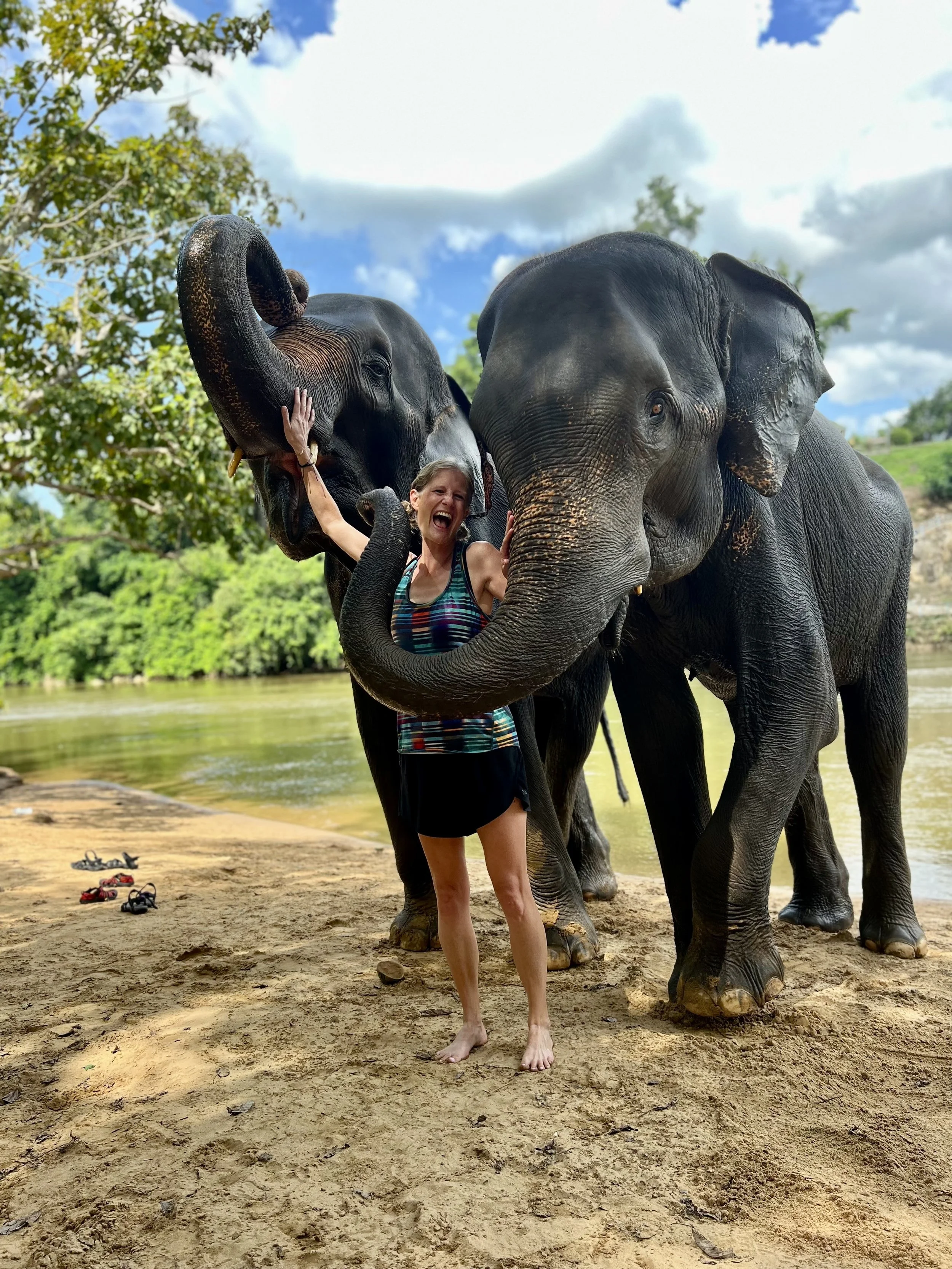
With so much uncertainty everywhere we look, how can we maintain hope? Join Anni and author Kaethe Schwehn for a delicious conversation about the stories we rely on and how we find our way in the midst of tragedy and chaos. Spoiler: it might be tealights.
Listen to full episode :
Transcript
Hey, welcome back to season three of Barely Christian Fully Christian. I'm Anni Ponder, and I'm super grateful to have the gift of your attention and time.
This season, we're diving further into conversations about what it means to love Jesus, to call Christianity to be better than it is and a whole lot more like Jesus, and to embrace the feminine aspects of God. I'm so glad you're here.
If you happen to be tuning in for the first time to Barely Christian Fully Christian, may I suggest you actually go back and start with episode zero.
There's a lot of information in there that will help lay the foundation for the conversations currently ongoing. Not saying you have to go back and listen to all the episodes in between, but that would be a really great place to start.
Ooh, my dears, I have such a treat for you today. I'm delighted to introduce you to my guest, Kaethe Schwehn.
Kaethe is many things, a professor of creative writing, holder of not one but two MFAs in poetry, the author of several books, including a gorgeous novel called The Gospel of Salome, which we will get into.
I could go on, but more than that, she's the sort of person I could talk to for days on end. I think you will profoundly resonate with what she has to say.
About the stories we rely on and the reality we find ourselves in and how she maintains her hope even with dorky rituals. You're going to love this woman. Hello, everyone, and welcome.
I am so excited to introduce you to my guests today. We have the very talented author, professor, and many other things, Kaethe Schwehn, with us today. And she is going to engage in conversation about probably many things with us.
I'm particularly excited to hear all about the writing and releasing process of her most recent book, The Gospel of Salome, which we'll get into in just a moment. And by way of other forms of introduction, so you can know who she is.
She was born in Chicago, but she's also lived in Minneapolis, Indiana, a rural mountain village in Washington that I happen to be quite familiar with.
And across from a mattress mart in California, upon the site of a volcano in Ecuador, near the coupling of train cars in Montana, and between the dusty walls of a farmhouse in Iowa.
So if that doesn't tell you something about this human, I'm not sure where to start. And she teaches creative writing, and she has two MFAs in poetry, which is why her prose is so delicious. So welcome Kaethe, thanks for joining us today.
How are you?
Thank you so much for having me. I'm so excited to be here. I'm doing well today.
Good.
And just so everyone knows, we are recording in the middle of a really weird advent, I would say.
I'm not sure how you would quantify this, but over here in my neck of the woods, there's been flooding and wind and just feels like a really strange advent.
Yeah, yes.
Yeah. Some of the darkest of darkest nights so far.
How about for you? Yeah, similar. I mean, the weather has just been a little bit strange.
Like there's a little bit of unsettledness, I would say.
I feel that in my bones. Well, now I realize I sound like a grandmother. I feel it in my bones.
But really, truly, like there's this quality of uncertainty in the air that I think is palpable for me. But notwithstanding, we have some really good things to talk about.
And our initial conversation when you and I were just getting to know each other over the phone the other day, I was like, oh, I think we could go on for days and days, so many things to explore together.
This is true.
And so these are the things, these meaningful connections that I get to make here doing this fun work that help me find groundedness and solidity, even in the really weird, unsettled nature of whatever is going on in the larger world.
Yep.
Yeah. So as we were getting to know each other the other day, I asked this question. I said, Kaethe, you know, if we met on a train, how would you introduce yourself to me?
And I thought what you said was so great. Could you just go go at that again?
4:39
Kaetheʼs Self-Description
Well, first of all, I thought it was a really great question.
But what I said, if I am recalling correctly, is basically that I am a child of divorced parents.
And so what that has meant for me growing up is learning how to navigate two different worlds and how to read what people want or need, their habits, their desires in these two different worlds.
And so I think when I meet people now, I'm most likely to try to figure out what it is that that person cares about or is interested in and then connect with them at that level.
So whether that's they're asleep and don't want to be bothered at all, or have a screaming toddler and I can connect about having screaming toddlers and how terrible that can be.
But at whatever I see in them, I think is what I would bring out of myself to try to form a connection.
Yeah. And I resonated with that so strongly because recently my friend Daniel said, Hey, how do you introduce yourself at parties?
And I was like, Daniel, I don't, you know, I go up to someone, find something that tells me about who they are, and then comment on that and find an end road.
So also being a child of divorced, perhaps that's just some survival strategy we picked up when when the adults can't figure the things out, you have to know who's in what mood and 100 percent.
But what what I determined from our initial conversation was the moment I sit down on the train, I'm going to want to be friends with you because there's a whole bunch about you right away that I'm like, well, you're fascinating. Let's talk.
There were so many points of connection for us at our last conversation. Absolutely.
Yeah, that's right. And so of course, very quickly, the conversation I know would go to, what do you value in this world and what's important to you and what work are you doing? And what do you feel is a really good use of your time?
And so I am certain that before long, we would be discussing the Gospel of Salome. And now first, I would tell you, I have a plant that I named Salome a while ago. You did.
I did, yeah, I named all my plants heroines from the history annals or current day. And so, yeah, I have a plant named Salome, but the fascinating thing is before your book, I'd never really given Salome in the Bible much attention.
I'd just known she was a woman who was around Jesus. And so you can imagine my delight when your publisher reached out and said, Hey, there's this book and I wonder if you could talk to the author, and it's called The Gospel of Salome.
And I was like, yes, I could.
7:30
The Gospel of Salome
So by way of introducing your book, maybe what what do you usually say when someone shows interest? Oh, that's fascinating.
And maybe they have a bit of Christian background and understanding of, you know, well, that's a character in the Bible and the gospel, but she's not really elevated very much. What would you say about this book? Yeah.
Well, first, I mean, one of the clarifications that happens pretty early on is, I think when people think of Salome, they usually think of the Salome that does the sexy dancing.
And that is not this Salome. But there's another Salome that shows up at the resurrection, right? And who has also mentioned a variety of other times.
So this is drawing more on the idea of that Salome. And I would say I'm somebody who has been I was raised Lutheran, and so I've been Christian for as long as I can remember.
But I'm somebody who's always, I think you can relate to this, felt a little more comfortable on the outskirts of Christianity. So I always joke that I'm like not Christian enough for the Christians and like too Christian for the secular folks.
Like I always feel like I'm kind of have one foot in both worlds a little bit. And so I always feel a lot more comfortable on the questions. And for sure, anytime that fits really well with writing, right?
Because you're always entering places of uncertainty. And I think writing at its best probably imitates prayer and spirituality in that in that way. So anyway, I've always loved Bible stories.
And Bible stories are, they're so weird. They're so strange, right? I mean, like when you really look at them closely, they're bizarre.
It's a lot of messed up, messed up characters who are lovely and wonderful and completely human. And we don't know all that much about their inner lives, right? So much of the Bible is this happened, this happened, this happened, this happened.
And so, I've always longed for more of the interior and the motivations and the desires and especially women in the Bible. We get so little of that.
And so, when I was in graduate school, I started writing a lot of persona poems, which are poems where you're entering the character of somebody else and then speaking in that voice.
And I did a lot of persona poems of women in the Bible and other folks too. But I knew that at some point I would like to try to do that on a larger canvas. And so, I wrote one novel and then felt like I was maybe ready to tackle this.
And this particular book came, I was writing kind of into things and one question that I had, the four canonical gospels, Matthew, Mark, Luke, and John, scholars believe that there's this other gospel called Q, that some of those gospel writers drew
upon. And so, at the very beginning, I was wondering what if Q had been a woman, right? Like, what if the storywriter that these other storywriters are drawing from, what if that person had been a woman?
And so, I kind of did some research along that line. And Salome did not end up being Q, but that was like, I think a lot of books for me begin with a question or a series of questions or different uncertainties I want to enter.
And that was one of them. That was a really long answer. I don't know if I even answered your initial question.
You did.
And you just seeded the ground with 12 more really good points. And I'm like, where do we go from here? But first, let me just say, oh, my goodness, I have goosebumps about all of this.
To anybody listening who's like, okay, so she's written the story about a woman in the Bible, and it's kind of speculative historical fiction. Let me just tell you, this is not the kind of story you found on your book and Bible store bookshelf where-
It is not.
Well, it's like, oh, the heroines of the Bible. Let's talk about- I don't want to disparage any authors or their writings, but I actually-
this is so funny. Let me just tell you this little detail. I've been thinking and writing a little bit about Vashti recently.
I got to write a scene for a play that Vashti will be featured. And so fun fact, I got a little nervous because I'm like, okay, I'm treading into Jewish territory here and I'm not Jewish.
So I reached out to a couple of different rabbis and said, hey, would you be willing to look over my story here? Let me know if I'm stepping on any toes.
Because I wouldn't know what I don't know and I realize the story, you know, it's it's precursor to Esther and all of that. So this rabbi goes, well, we don't really talk about Vashjie because she's not very honorable.
And so I can send you some references to Ruth and Naomi and Rebecca and Leah and he lists like all of these Old Testament women that, you know, I'm supposed to talk about and revere and I was like, yeah, I want to talk about Vashjie.
So thank you anyway for your time, rabbi. I appreciate your help. So this is not a story of here's a virtuous biblical woman and let's all learn how to be like her.
It is not, especially because she's not Jewish or Christian or she is not religious, ironically.
She is the least religious person in the book.
Okay, so just so we're clear, this is not one of those books that if you have the same sorts of questions that led you to my podcast, you will not be put off by this book. Let me just tell you that right away. You'll like this book.
Okay, so what else do you tell people about? Because I don't want to give away things, and I would very much encourage readers, like this might be a story that you would love to immerse yourself in.
What do you give away about who Salome is as you're introducing this story?
13:48
Book Plot Research
Yes.
So, yes, I usually say, so the book has two sort of main threads.
It moves back and forward in time, and it begins in 38 CE in Alexandria at a time when the Roman governor declares the Jewish population of Alexandria, who've been in Alexandria for over 300 years, to be foreigners and aliens.
And he pushes them into a tiny corner of the city. He restricts access to food, and then things unravel and they are persecuted in really horrific ways. And that is very, that's true, historical.
And in the middle of that, at the beginning of sort of this persecution, a man named John Mark shows up, and he is one of the first followers of Jesus. And he shows up ready to sort of proclaim the Gospel.
But he has trouble doing that when he arrives. He still has his own kind of personal questions about the Gospel. And people go, tell him, like, you should go and talk to Salome.
Salome will have some of the answers you're looking for. He goes and finds this woman. She's like 60 years old.
She's a physician. And he's like, I don't I don't know why I've been told to go and find you. But what do you have to tell me?
I've heard you, you know something about Jesus. And she says, yeah, because I was his mom. I mean, she doesn't say it like that.
She's a little right. Not with such a modern cadence. But yeah, very contextual.
So right. So and he is pretty flummoxed by this. And so the novel itself then moves back and forward forward in time between the sort of present day moment in Alexandria over the course of about a week as things are deteriorating and getting worse.
And Salome is trying as a physician is trying to help the Jewish population. And then it moves to the history of Salome's relationship with Yeshua, Jesus. And so we're moving back in time to her memories.
And she's telling this story to John Mark as this these tense sort of events are unfolding. So it it's doing both of those things. That's usually as much as I give away.
As you give away.
Amazing. Yeah. And then people have like all kinds of questions.
Like, so are you say, yeah, okay. Hold on.
What?
I would love to hear it because I know you must have done like deep research because there's not only historical things that you're weaving in here and it feels like you might have a PhD in biblical archaeology, just reading the way that you write
about things. But also the pharmacy aspect and the plants that are used and the customs. And so how did you go? How did you go about putting this story together and it's so intricate?
Yeah, that's a great question.
I would say that their research is sort of always happening or was always happening alongside. And but that a lot of for me, writing is seeing kind of what's happening.
Like it's more like I'm watching the characters than like making conscious choices about them. So there's a lot of kind of watching and seeing what's happening.
And then sometimes you get stuck because you can't move forward in a scene until you know something about the time period or what they would have been limited by or what somebody like what someone's wearing might not be as important.
But if there's all of a sudden, there's going to be some sort of medical drama as there are a number of those in the book. I would have to figure out, OK, what what could that have been? What would people have thought that was?
How would that have been treated? And so Salome, as a physician, there was a lot of research done there.
But I will also say that one of my favorite books of Biblical historical fiction is Quarantine by Jim Crace, which is a stunning, beautiful book about days, the days Jesus spent, the 40 days in the wilderness.
Only Jesus is sort of just a side character, and we're really watching other pilgrims who were there, and what they're going through.
Anyway, I read an interview with him, and he was like, somebody asked him about how he did his research, and he was like, oh, I just didn't do any research. Maybe I'm misremembering this at this point in time.
But that's what stuck.
Yeah, that's what stuck. And I was like, the only old white guy can give that answer. But, yeah, but it did make me realize that, my job as a writer isn't to be a historian or isn't to be a theologian.
It is to portray the truth of this world as accurately as I can.
And sometimes what's going to be more true is my own instincts or listening beyond myself, and less about digging up a specific detail about what color stolas were available at the time to wear.
Yeah. Right. Absolutely.
And so letting the creative process then just sort of take over. And you, I really understand what you're saying.
I mean, how did it go with you with Vashti?
Like, oh my goodness. Okay. So here's the backstory.
This is so funny.
I have gotten connected to this collection of women who do a show, which if you happen to be in my neck at the woods, I'm going to get you tickets for the end of the summer, where they tell stories of women through history and they focus in a lot on
science but also other aspects of history to try and show the thread of caring for the earth and women's voices rising and how. And so this particular show that is being crafted right now, it's being written, is called Common Ground.
And trying to show how like we all have this responsibility to care for one another and the earth and all of these things. So the director and I were having a conversation and she's like, well, I know that you are a Christian.
And I'm like, hold on, what do you mean by that?
You're like, listen to the first episode of my podcast.
I love Jesus. If that's what you mean, cool. If you mean anything else by it, find a better term.
No.
So she's like, she's like, I would like a biblical story in my show because that's something we don't have.
We have like Marie Curie and we have some indigenous women and all of these things. And she's like, I'd like a biblical story. Could you please write a story about Noah's wife and daughters-in-law?
And I was like, oh, challenge accepted, right? So I sat down to write about them and I actually first reached out to a friend of mine who is a rabbi and that's not the one from the previous story. This one is, he's been on this podcast before.
He wrote a really interesting book about the masculine and feminine imagery in God's name. If you read it backwards, it's this whole thing.
It's really cool.
Yeah, so I love talking to his name is Mark Sameth. So I reached out to him and I was like, Mark, do you have any insights? Like, where can I start?
Here's my commission. I need to write about Mrs. Noah and the daughters-in-law.
And I don't want to do any research in the traditional Christian sources that I would look at because they're all going to be like, you know, God was so angry at the earth and destruction and all that.
But I have a feeling that from the Jewish perspective, it might be something that I could work with more.
So he gave me a couple of ideas and I sat down and I read the text and then I read his ideas and I would go back and forth and I'd like try to see these women and they would not come out to play. They would not talk to me. They would not show up.
I would sit and do all of the things that I do to get into the creative space and no one would join me. And it's the day before draft one is due.
So my director and I are like talking on text and she's like, well, I'm coming by for first draft tomorrow. I'm really looking forward to it. I'm like, yeah, me too.
This will be great. Sitting down, what do I do? I grab my phone so that I can go sit down at my desk to start writing and see if I can just squeeze anything out.
And the substack article pops up and this woman has, I don't even know this woman, but it pops up on my screen and it says something about Vashti. Like she was just thinking about her. And I was like, Queen Vashti.
Now there's a woman I can work with. And then this story just happened in front of my eyes. I could see the whole thing.
Wow. I wrote it all down. Out like it just poured out, right?
And then my director comes by the next day, I was like, so, hear me out.
Slight change of plans.
But NOAA women would not come and play. But I have this other idea. And she's like, yeah, I asked for the story around NOAA.
And I was like, I know, and I could try and go back, but no one would talk to me. But this woman, and I showed her the script, and she's like, this is a really beautiful script, but I don't see how it relates.
And I was like, well, I see the connection because her show really needs to be about care of the earth specifically and then also about the women standing throughout history trying to do that.
And I said, well, I kind of see this connection where Vashjie is about to be used as a tool in some way for the men's enjoyment and entertainment and who knows.
And in the Jewish, not the canonical text, but the extra scriptural, extra Torah text, it is said that when she's ordered in before the king, she's ordered in just wearing her crown and nothing else.
And so I said to my director, what that means to me is like women in that moment were being perceived as a thing only to be used by men. And if we allow that to happen, then we also see the same happening to the earth.
And her eyes lit up and she goes, are you talking about ecofeminism? And I said, well, yeah, essentially, like I think there's a link to how we treat women's bodies and how we treat the body of the earth.
And she goes, oh, I need that element in my show. I think we can make it work. And it just became this huge thing.
So it was this moment where like I didn't sit down and go, here's a character, I'm going to bring her to life. It's just she sprang to life in front of my eyes.
So when you say you sit and watch the characters and then write down what they do, I intrinsically understand that.
Okay. You also have you heard of the Book of V?
No.
Okay. So biblical historical fiction dealing with Vashti. And but I'm trying to remember because I read it a while ago.
But also it's like three different time periods. So it's like, it's like the story of Vashti and then a woman in the 1950s and a woman like a contemporary woman.
And it's like all three of them and like similar things going on with power dynamics and men and all three of those situations.
Okay. Thanks. I'll just pop that on to my reading list.
That's amazing.
Yep.
Oh, thank you. Okay. So I'm clearly not the only one to notice this amazing character.
And so, oh, that's so fun. Well, I look forward to reading that. I'll report back.
Yes.
So you think.
So I am curious because when you endeavor to put so much time and effort and love and your soul into a book that of this caliber. And let me just pause. I'm going to tell my listeners this one thing so that they can understand.
I really do hope people will read this book. And here's one thing that I will say. The imagery, the metaphors, the carefully crafted sentence after sentence after sentence in this story.
There's so much poetry in this prose that I was telling my friend who is, I think she would describe herself. I think she's a self-described literature snob. She will not read a book unless it's one of Pulitzer.
Like she's like, I just don't want to bother unless the writing is that good. So she was at my house the other day and her husband, they were all here, and he picked up a copy of the Gospel of Salome that I had on my mantle.
And the cover is so beautiful and inviting. I'd love to hear about this artwork. He goes, What is this?
And I said, Oh, oh, I'm reading this book. And here's the story. And I said to my friend, I actually think it may not have won a Pulitzer just yet, but I think it's it's writing is up to your standards.
I think you should read this because it's so elegant and intimate and gritty. So anyway, there's my there's my plug for it.
OK, so thank you for that lovely plug.
If you happen to be a book snob, this one will probably check a lot of your boxes.
27:42
Publishing Journey Questions
So as you were thinking about getting this book into the world, and of course, I always use the imagery of like birthing this book.
Right. What was your hope of Advent? So it is.
So I mean, like so we're talking about Mary's womb every five minutes.
That's right.
What was and continues to be and has it changed?
Your hope for how this story will find its way in the world and what it might do and how it might come alongside people in there in that moment that they're in right now.
Yeah. So this, the story of this book was one of those births that goes on for like five days and then, you know, like it's never ending because so it took me about five years to write.
And then I gave it to my agent and she loved it and was like, this is going to be amazing. And the other readers that I had given it to had loved it too. I mean, not, not earlier drafts.
That's another story. They were not such fans of earlier drafts. But by the time I got it together, yeah, and so I was like really excited about it.
And she tried to sell it like in 20, in January of 2021, which was like not a great time for anyone. Really. I don't, I don't think anybody like has a star on their calendar.
It's like best, best time of my life.
Five stars would highly recommend.
Five stars would highly recommend January 2021.
I think myself, like I was only reading like it was like I could only do books that felt like champagne, you know, like it's going to be a little bit light and crisp and bubbly and like maybe it'll distract me and numb me slightly.
Like that is what I wanted from my reading experiences. And and this is it's a heavy and intense book, and it does deal with some of the issues that were front and center at that moment in time and are again now.
But so she had trouble selling the book. And that was really, really hard for me, partly because this book, more than like the previous one I had written, really has a lot of my heart and questions inside of it.
And so to not have it be able to be in the world really felt like, I don't want to be super dramatic because obviously people are dealing with really hard things in life. So I'm not going to pretend that this is up there with that.
But for me personally, it was hard, and I kind of had to let go of it. And that took a while. And but I would keep like every once in a while, there'd be like a contest or there'd be something.
And I would I would just submit it myself, because I think as I let go of it and became more separate from Salome, it also let me advocate for her in a way that didn't feel like I was necessarily advocating for myself.
OK, right now you're describing my parenting journey with my teenager. So do go on.
That and I think and I have a 16 year old, right? So I was learning that. Yeah, it's just I just yeah.
And so, yeah, my mantra with my teenager. Well, she doesn't know this is my mantra, but my mantra all the time is the space between us is holy.
Oh, I feel that so deeply.
Yes, like you were I don't know. Yeah, I was listening to side note was listening to a fabulous book, audio book today. And she the woman in the book was describing parenting.
A teenager is like holding out a hand filled with bird seed and trying to like coax a wild animal to come near you. Right? Like it's 100% 100%.
So point being, finally, after having kind of let go of this book, I noticed that there was a competition through a new newish press called Wild House. And that the press itself was interested in like spiritually adventurous storytelling.
And I was like, oh my gosh, like a press that has one foot in both worlds, like this, this actually sounds like me, maybe. But I was like, oh, I don't know. It's like a small new press.
But the contest was being judged by Rebecca McKay. And I know her work well, and her great believers was nominated for Pulitzer. There you go.
Your friend has probably read it.
I bet she has.
And so I was like, wow, you know, if she chose that, this book, like that would really mean something to me because I think she's an amazing writer. And so I submitted it and it won. And so that's how it eventually made its way into the world.
But I really had to, I really went through letting go of it before getting to see it be in the world. But it also has meant that like I think unlike with my first like this was a much smaller press.
And so in some ways, there's a lot less stress on and pressure on me to like sell a million copies. But it also means that there's not the publicity machine behind it, right? So there's just not a ton of money there, which is totally understandable.
And the press has been super amazing. I totally recommend working with Wild House. They're fabulous and have done like everything that they can.
But I mean, they're not Heshet book group, you know? Right. So I think, right, like I think my deep hope for the book is that it finds its way into the hands of those who need it.
And that might be one person, but I hope it makes its way to that one person. You know what I mean?
Like, yeah, totally me. Yeah.
So, I mean, it'll rely more on word of mouth and things like that to kind of make its way little by little into the world.
But I do, I think for the people that it speaks to, it will, it's one of those books that for the people that resonate with it, I think they'll resonate deeply. And then I think there'll be lots of people that are like, not my jam, but that's fine.
You did not follow the impossible accounts. And so, that's right. Yeah.
Those people, by the way, do not listen to this podcast. So you're, you're not.
Fabulous. Fabulous.
OK. So I'm really curious right now. What can you share?
Some of the questions that are embedded in this story. Like you talked about your questions being, and this is my thing, too. Like they're my deepest treasures, like the questions that have led me on my door.
So what are some of the questions that live inside this story?
Yeah, I mean, so for me, one question was, do I really... So the parts of Christianity that I feel comfortable, like trumpeting, are like community and liturgy and ritual and those sorts of things.
But I wasn't, and Jesus as like great guy, like great model citizen. Like, right, like it was very easy for like, it's always been very easy for me to get behind like, care for the marginalized and oppressed, right?
Like things like that, absolutely 100%. But I didn't know if in my heart of hearts, I believed that Jesus was resurrected.
Like, I believed in the power of the metaphor wholeheartedly, because the metaphor has of resurrection, has shaped my own ability to live abundantly in this world. But I was like, do I really believe that the resurrection happened?
And so I wanted to write into that. And then the other question for me was about parenting, and about what love looks like when it's really hard versions of love.
I think about parents who have had kids who are addicted to different substances, who have, right, who have to sometimes, sometimes love is like pulling back and letting terrible things happen, right?
Like love is sometimes realizing when you can't save someone. I don't write like all of these. Like for me, yeah, I'm just always trying to kind of, because I'm trying to figure out all the time, how do I best love my kids, right?
And when am I recognizing that the space between us is holy? And when am I like, you are getting over here into my arms, and I'm not letting you go because you need to be abundantly loved right now. And like you don't get to wiggle away.
Like you have to feel this momma love coming at you.
Like it or not.
Like it or not. You're getting bulldozed with momma love. And so, and I think as I like, and I'd love to hear what you think about this too.
I think the story for me also invests, like Salome is a physician and she has this deep calling to her own vocation. And that at this period of in time, hand in ways in our own time is at odds with being a mother, right?
And so she has to make choices about that. And what is, what does that look like? And what is lost in those in those choices and those and those callings?
I don't know. Like have you have you felt the mothering and vocation at odds?
No, it's just seamless for me. That's not what you're talking about, Kaethe.
39:37
God as Motherhood
Well, actually, the Google calendar always lines up, right?
So this relates to how I've been relating to God lately also.
So it's no secret on here. I'm sure I must have told you about this. I really am in a season of relating to God as my mother lately.
And in doing that in the last few years, it's been like an incredible sort of re... What's a good word here? Like putting myself back together or she's putting me together, right?
In ways that weren't available until now. And I have been recently wondering if she gets tired of me talking to her as a needy child all the time. And if there's more to her than just mothering.
Because in this moment, I have been known to say to my children very recently, you know, I am more than your mom. Like I am your mom. I am.
But I think I may have told you this. I realize that I'm a supporting character in your life, but I am the protagonist in mine and I need to handle some stuff. So, like, there's more to me than just being a mother.
And I wonder also if God feels that way. I mean, I love to anthropomorphize God and people get mad about this, but whatever, that's all I've got. I only have the fore end and putting things in my own experience and looking at it that way.
So that's what I've been to do with abandon. But I wonder, God, is it, would you ever like me to just go ahead and not be so needy so that you can get to the other things? So yeah, that's a little glimpse into my personal moment.
I think it's really interesting. I'm 46 years old now, entering perimenopause.
So my body is like, okay, and now there's this new shift happening, and we're going to do this next season where we're not just nurturing people to keep them alive, but now stepping more fully maybe into something vocationally and developing parts of
me that I haven't been able to for a long time. And there is this like tension. And I was just telling my oldest, she's home from college right now.
I was like, I'm learning not to say that I feel guilty when I tell the family I'm not available because I need to go do this other thing, because it really isn't guilt if I'm just choosing a different value of mine.
Like guilt is when we like do something that goes against our own value system, and then we feel guilty as we probably should.
But there's this other angsty thing where it's like I'm learning to disappoint people I love in order to take care of myself or other things that also matter to me. I'm not sure if that lands at all.
Of course, of course. Well, I'm also curious when you, okay, so as you have sort of transformed your own image of God, like have you noticed any kind of parallel transformations and how you perceive of yourself as a parent or how you parent?
Absolutely, it's like so. Like I could talk for days about this.
I think the most like salient thing that I am knowing into these days is because I have full license now, because I've given myself permission and I have also been around enough people who have this permission to really see God as my mother.
Then that like makes me so much more holy as a mother. And this is not in humor and self-aggrandizement.
But the work that I do, the love that I give, the way that I use my body, mind, soul, heart, everything of me to nurture these people that I take care of, is sacred because I am made in a mago day.
I am in God's image, giving of myself and also learning to not give what I don't have and not give what I shouldn't give and not over give either and kind of do the dance of finding what's good for them and what's good for me.
And do I put my mask on first and then assist all of those things that so many of us have to contend with after being immersed in the culture that says, you're a woman, just give yourself away. Everyone will be happier.
And so it makes it seem, it makes it to me so much more sacred to just be a human, giving my love as a mother. And then also, and also I wrote this in our Christmas letter to people.
When Jesus said, love your neighbor as you love yourself, that part is jumping out in bold to me right now. And so I think that's probably why I'm fascinated with the question toward God.
Do you ever wish we would stop being so needy so that you can like, and I realize God operates outside of time, blah, blah, blah.
But it's been useful for me to wonder, do you ever just want to take care of yourself or the other projects that you're working on and not have to sustain us all of the time?
Okay, as you're talking about that to like, you know, God as mother, it makes me realize how much our view of motherhood has been shaped by Mary, right? Who's, right? Like, you have a plan.
Yes. Right. Like, like, there's beautiful, beautiful things about that.
But the sort of levels of self-sacrifice, right, are are many there and highlighted, right?
And so maybe in certain ways, even though I'm not talking about mother God in this book, I feel like you and I are on similar projects here of how, how do we invest, shape, create, imagine other versions of what it means to, to mother with God
compassion, right? Like, what, what is that? What does that look like? And how, how can it that, that question of loving, loving ourselves, right?
And that permission to do that in the act of mothering is so powerful. Yeah. But I really don't know that tension between mother God and good old Virgin Mary is like an interesting one.
It really is because you're right.
And that I, you know, this will shock everyone who's ever heard me say two sentences together. I blame patriarchy for this.
Shocking.
Shocking.
Because the way I see it, the systems of patriarchy, imperialism, white supremacy, see all of the things that I think are sucking the energy and the life out of this planet, depend on women being exhausted, so that we cannot rise up into our own skin
and our own selves and our own gentle fierce power wherever we need to be and claim our own lives. But we just are taking care of other people's needs. And it seems to me to be in service of the machine continuing.
And so this feels like, you know, like holy resistance that we're doing, writing stories, talking about these things, pushing back to our kids and saying, hey, I have a self that needs attention right now, and I'm going to care for myself.
All of this seems to be, yeah, like maybe Mother Mary was a whole lot more than we've ever been told. But the story that we've been given is, oh, she's just like so obedient, and then she just takes care of everyone. And that's all we ever hear.
We never hear her say much about herself. We don't know who she is as a human other than what she's giving to other people. And you can kind of hear that narrative.
Have you ever gone into like the Hallmark store or Target's gift cards or whatever, and you look at Mother's Day cards.
And every single one of them says, thanks, Mom, you are so selfless, and you just give and give and give, and you never think about yourself, and you're always taking care of us, and you're like, go have a spa day on us or something.
And like, that's the message that our culture wants to give women. That's what it means to be a woman. And I'm like, no thanks, I need a better story.
Yeah. So I'm going to listen to Salome as she is having a very different narrative.
Yeah. Yeah, because those mean the stories are so powerful in terms of how we shape our lives and how we then understand what is happening to us. Right.
And yeah, and I think there's I mean, I think just culturally, we're at such a loss for a shared story right now. Right. Like we are, we have such different versions of what is happening in our country right now.
Right. And not being able to agree on a shared, a shared story or a shared understanding of that is, right, like deadly. That is catastrophic.
It really like we don't know what ground we stand on.
And like we can't agree what truth is. I mean, it's back in Pilate's balcony, right? Well, isn't Pilate the one who was at the other guy?
What is truth? And he's washing his hands of Jesus' blood. If we can't even tell each other what is actually happening around us, what do we do?
How do we find our way out of this?
Yeah. I don't know the answer to that, except to think carefully about how we, the stories that we surround ourselves with and the stories that we repeat, right? Often.
I mentioned this at the end of the book, but I was really shaped in the writing of this by a conversation that I had with a friend who was Christian and, oh my gosh, here's my Perry Mountepratt's brain. Transferred, not transferred.
I said, when you move from one religion to another. Yeah, not Christianism.
I would like to be admitted to get.
What is it? When you move from one religion to another religion?
Is there a word for this?
Yes, when you, oh my gosh. I hope you edit this part out. I can hear the listeners screaming the word at us right now.
What would you trans, like?
Transition, transmute, trans, what? Transfiguration.
Transfiguration.
Transfiguration.
Thank you, convert, convert. Not trans, convert. Okay.
Wow.
I hear the perimenopause rain though. I have thoughts on that. Maybe we'll get there later.
Okay, keep going.
Yes, okay. Convert. So, convert.
So she had converted from Christianity to Judaism, and I was like, oh, that's so interesting. Like, tell me, tell me about that. Like, why?
And she was like, well, I just realized that I was an Exodus person. And I was like, say more. And she was like, she was like, well, I just said, I just believe that ultimately your were shaped by the stories, right?
That we tell over and over again. And the Christian story is resurrection and the Jewish story is Exodus. And I am an Exodus person.
Like that is the narrative that for me is transforming and liberating, right? Like that is the story I need to hear over and over again. And I just thought that was like so beautiful.
Like, and it made me realize we don't have to have the same story, right? But like, right? But both of these stories are about how we find liberation and different kinds of freedom, right?
And yes, they are stories of liberation, whether through the life, death, life cycle of the tomb or, or the Exodus story that I was thinking about today, because I think you wrote some things about this in here.
The coming through the waters, right? The passing through the waters is like a book story.
Yes. Oh, yes. Yeah.
So I was just really moved by that idea because I think those stories, the ones we repeat become the ones that help us make meaning when crappy things are happening, right?
Yes. Because we all have to be in this present tense narrative. So what are we going to tell ourselves about?
How do we get through it?
Exactly. And I like so once when I was dealing with, I don't know if you've had it, I'd love to hear if you have had these moments too. I was dealing with a breakup that was very painful to me.
And I was talking to this woman and she was like, well, I went through a divorce and took me about three years to really kind of recover from it. And she said, she looked at me and she said, but you are an Easter woman.
So look around the tomb and see what it has to offer. You won't be here forever. And that, right, like completely transformed where I was in that moment because I was suddenly in the metaphor of this larger story, right?
It was going to have an ending and that the darkness was a place of like transition and growth and holiness rather than like, I'm just going to play REM. Everybody Hurts on Repeat, which is where I was at that time.
I mean, whatever gets you through those times.
Right. It's not like the story kept me from continuing to play that. But it did.
But I'm just like, I mean, have you had moments like that where you feel like the story, like your own story becomes contextualized in this larger story? And that makes it possible for you to...
Yes. And that's why when we were both like, how do we get through this? Right?
And you said, well, it has to do with the stories that we tell ourselves. That's also what I have to say about this whole thing is like the stories that we know in our bones matter. And they guide us.
Yeah, I'll give you this one. After a breakup. And no, it was before a breakup.
It was a breakup that very much needed to happen. I had, okay, this is going to this will be funny to anybody who's our age. Did you ever watch alias that TV show with Jennifer Garner where she's a spy?
Sure.
So that I mean, she was like 25 when I was 21 or something.
And so I was like, yeah, love this show.
Right.
Okay. So for anybody not from not born in the if you're not a Gen X or you might not get this, but whatever Jennifer Garner, she's a spy. She's beautiful.
She's powerful. I loved her. Okay.
So I'm in this dark, dark, dark space in my life. This is back in 2018 and 2019, like the actually advent to new year time right now. So we're coming back to revisit this.
I was reeling from, I'd had about with mental illness. I had actually been hospitalized. I had almost lost my children.
I'd lost my job. It was a full stop moment in my life. Everything came to a standstill and I was utterly and wholly, unsure if I could ever put myself back together.
So I'm in this very dark space. And then I remembered a scene from the first episode of that show, where she is captured by the bad guys, whatever, and they have her tied in a chair inside this warehouse room.
They've given her the truth serum and they've left her alone for it to take effect. And they're going to come back and torture the truth out of her. And then she escapes.
And so later in the debriefing room, they're like, well, how did you get out? And she says, I knew I couldn't get out of the room until I got out of the chair. And so I looked around and found something to break myself out of the chair.
And then I could get out of the room and then out of the area and then back to safety. Right? That knowing came home to me when I got really still in and asked, like, how do I move forward right now?
And I knew that I had to get out of the chair I was stuck in first, which happened to be a relationship that I had known the whole time, was going nowhere and shouldn't have been, and I did it anyway.
And so I summed up every ounce of courage and thought about Jennifer Garner a whole bunch and probably should have listened to spy music at that point to motivate me and found what it took to end the relationship, which then did open everything.
I mean, it was the metaphor worked for me. I got out of the chair, then got out of the room, then got out of that neighborhood, then on and on until things came back to a place of moving forward again. So narrative for me is my medicine.
I mean, I have this quote on my wall by Ivan Illich, perhaps you've come across it. One of my professors dropped it about like, if we don't need reformation or revolution, what we need is better stories.
Because that's the guiding light that, and humans seem to be storytellers as far back as we can go into every culture that we find. Everybody has stories that help us make sense of the world as we're in it now. Yeah.
So that's why I love what you did in this book, because you take my favorite story, the one about Yeshua, and you look at it in such an intricate, deeply human way. I mean, this story is just so utterly gritty.
And then there's this thing that you do that I wanted to ask about. You refuse to use God, and possibly because Salome is not religious, and she's been burned by her mother's use of religion and all of that.
You refuse to let God be just a magic worker, right? To solve the problems that whatever.
You make us go through this story as humans, observing this story as humans, experiencing every little thing without the promise of anything but humanity and anything but reality here and now.
And to me, that feels, for some reason, that feels like hope. And maybe that's because of the moment that we're in politically, economically, globally, our poor ecosystem.
I said to one of my daughters the other day, I just need you to know, because she was having a hard moment. No one is coming to save you. You have to make this happen.
You have to get out of bed and do your stuff. And like, this is going to be hard, but you cannot have the narrative in your mind that something magical is going to fix all of this, and then you'll feel great.
She was just having a funky teenage moment. So, when you say, when you're talking about a good physician fails the pa... I'm quoting here.
A good physician fails the patient if he promises the presence of a God. To promise the presence of Yahweh to these people was a kind of harm I refused to watch. Can you unpack that a little bit?
Because I think there's probably a whole PhD in Theology right in that little two-step.
I mean, for Salome, she... So, in the book, Mary is also in the book, Mari. And Mari is the one...
Salome ends up kind of being this like auntie to Jesus, like living close, but Mari is the one who really raises him. And Mari is deeply spiritual to the point of that, sometimes overwhelming her physically and mentally.
And that also adds, and so Yeshua is sort of starting to follow the ways of Mari and to take up spirituality.
And whether that's just through her tales or whether he's developing these God-given abilities is like, I think a little bit unclear in the book, potentially, hopefully.
You did not specify exactly.
But for Salome, she really has seen the damage that can be done by those who are offering religion or magic as a balm or a salve, and trying to often benefit or make money from that story or that version of religion.
And so she very much sees the danger of a story that takes people away from helping one another, I think, or a story that takes people away from doing their own work of healing and relying on this supernatural force that's going to come in and do
that for you. And as a physician, she feels like she can only really kind of trust herself. And that ends up being like a problem for her too, right? So I think in the book, I wanted to show both of those sides of her.
Like, yes, she has this this view that you don't want to wait for God to come and do magic. But to not have faith is also to become God inside, like can lead to a sort of God complex for the self, especially as a physician, right?
Because all of a sudden, you're the one that holds all the power, right? So that there's like a double sided coin, right?
It is. It is both sides. Absolutely.
I guess all coins are double sided.
Well, you know what I was saying?
I totally do. Well, because I think about this a whole lot, actually, like the one way or the other way.
And I guess like a human life really well lived or a successful human life might for me be one where I strike some kind of a balance between those two things, where I don't ever want to lose my faith in a good benevolent, wonderful God, but I also
don't want to just sit around and be like the, you know, that story where the guy's on his roof and God sends a boat and a helicopter. And he's like, well, you never, you never say no.
Just thinking of that too.
Yeah, okay. Well, yeah, especially right now, in this moment in Washington state, we're all thinking about that story.
Oh my gosh. Well, you got to say the punchline in case some of your listeners don't know.
Okay, okay.
You got to tell the full joke. I mean, it's a good one.
Here's the whole story.
This is the humor. This is the humor in the middle of the sphere.
So there's this guy stuck on his roof because there's a flood, and he says, God, will you please help me? And God says, yes, I will help you. And so pretty soon somebody comes by rowing a boat and says, get in.
And he goes, no, thanks, God's going to save me. And so they row away. And then after a little while, a helicopter comes by and drops a rope down and climb up and like, no, thanks, God's going to save me.
And then a tidal wave comes and washes them out to see. There's probably one more because there's usually three. Somebody else tries to save him.
Maybe there's like an orca, whatever, do what you like.
Yeah, sure.
He ends up dying. He goes to heaven and God's like, hey, welcome. And he's like, hey, why didn't you save me?
And God's like, I sent you a boat and a helicopter and the orca or the whatever. And you refused, so you died. Like, why?
He's like, oh, I thought it was going to be you.
So like, right. Yes.
We and I feel like that's Jesus' whole entire message, what he walks around for three and a half years saying.
Right.
Like, take care of each other. Like, feed hungry people. Go and be with sick people.
Like, alleviate suffering wherever you see it. Take care of the other person as if they are God themselves. See God in the other person.
Like, what is so hard about that message?
It seems to be hard for some people right now.
Oh, because we're waiting for... Oh, I just can't. The whole, the whole Christian nationalism thing is just...
It is so against every word that ever proceeded from the mouth of Jesus. Yeah. That we would make up kingdoms and empires here, and we would be wealthy and self-serving and have dominion over other...
It's just like...
I am shocked, and I have no idea what part of the text that came from.
But I had a question for you, and let me see if I can pull it back. And meanwhile, is that for a baby that just came in the room?
I heard it's my mom that I didn't know was coming over, but now she's leaving. Okay.
Oh, okay. Well, sorry about that. That's all right.
I was wondering if... Oh, okay. If this that you wrote in here where Salome will not give false hope, and will not tell people, oh, I'm going to do this magic thing, she's really trying to be...
The way I see it, she's trying to be so honest and not... She has experienced so much suffering.
She's not like, here, I'm going to keep you from suffering, but I'm going to be with you and try and help you heal, even in the midst, if that's rooted any place in your own story.
Oh.
And or also, the refusal to promise, you know, like the, just slap a Bible verse on it, and God will come and take care of it, right? Like the bypassing of the work of being a human, which is often so gritty and dirty and vulgar and painful.
Yeah. I mean, I think very, one of my most formative childhood memories was, my family went on a vacation when I was like 12, 13, 13 years old. And it was over winter break.
And we first went to a family reunion in Disney World. And then we went to Haiti.
And we went to like the poorest slum in the Western Hemisphere, where like lots of the kids had AIDS and TB and like, and the contrast between those two spaces, especially like being 13, I think really, really affected me in a really deep profound
way. And... I had other, I mean, I've had other experiences since when I was in college, I did a great program called, that was called Hecua. And for my study abroad, I lived in Ecuador and I worked at a orphanage with girls.
And yeah, I mean, I just, I think at a profound level, realizing that so many people who are in need of salvation are not going to be saved in the way that we think salvation looks like.
And so the most profound things we can do are to be present and to offer what we can at those moments in time.
I mean, I feel like a lot of times when you when you hear someone talk about a moment of intense trauma, not always, but sometimes what they also describe are the people who are present to them, right?
And that those interactions come through as as vividly as the trauma itself.
Absolutely.
Right. And so that that is that is always the calling, right? But it's also like, I feel like this is one of those things that's like really easy to talk about and on a podcast.
And honestly, a lot of times when I'm in these situations, I'm just super irritated or bored or annoyed or really don't want to be in that space, you know, because it's I do.
Those spaces of pain and suffering are not, they're hard places to hang out in. And the people who hang out in those spaces on a daily basis are amazing human beings. And I'm not one of them.
Right.
Well, and we are, because of the stories that we tell ourselves, you know, on the broader societal scale, we are so averse to prolonged suffering. We are terrified to think about our own absolutely inescapable death.
When I was a high school English teacher, I would have my students, I'd be like, OK, I would like you to do this imaginative exercise, please, as high school seniors. Would you imagine that you have lived the life that you very most hope to live?
You have accomplished the things and you've become the person that you want to be, and you've lived the life, and now you're at the end of your life because you're really old, and then you die. And then could you write your dream eulogy?
What would you want for people to be able to say about your life? Let's begin with the end in mind, that whole thing. So many of them could absolutely not handle that.
Like, I will not think about the fact that I will die one day. Nope, I will not do this assignment. Give me something else to do.
Like one girl's mom wrote me, you know, my daughter has an anxiety disorder. She needs to not think about her own death. I'm like, maybe that's part of our problem as a society, is that we don't think about our own death.
I mean, I don't want to diagnose your kid, but I think that I, what is the problem? So now I just jumped off my train of thought. It just, does your train ever just come to a screeching halt?
Yeah.
Yeah.
Where were we going?
I'm still looking for the word convert, you know? I'm sorry. Okay, well, until we, the fear of death, right?
Okay, so this is an interesting thought to me because in this whole conversation, I'm not sure how many times the word uncertainty has come up, but it's like over and over.
That's really what we're talking about here in our own humanity in the 21st century back in Salome's time in Alexandria and before that, when she goes back and back. There is no certainty in humanity. We can never figure out what's about to happen.
We can't predict it. We can't force it. Things are never in our control, no matter how powerful or wealthy we might become.
And so that clearly is not what we're meant to be doing here.
So instead of expending so much time and energy, trying to secure something that we will never grasp, that certainty and that control of our circumstance and direction and all of that, we can at least begin to tell stories where we look squarely at
one another and at ourselves and see who we are. And maybe we can be fortunate enough to be guided by the words of Yeshua or the story of the Exodus or whatever stories help to illuminate our minds and explain this reality to us and encourage us to
do something, give us a little bit of hope. So my favorite question lately to kind of close out my podcast conversations is this one. When you are looking at the dumpster fire of so many things going on around us right now, do you still feel hope?
And if so, can you bring that out and share it with us so we can come around that fire and see what it is that warms you up on the coldest nights?
1:14:44
Hope in Community
I love that.
You know, I, this last weekend, this group in Minnesota put together a gathering. Isaiah is the name of the organization.
And it was a gathering of people of faith who want to do work towards dispelling any kind of anti-authoritarian action and promoting values that I think you and I would certainly agree upon that are useful for helping everyone into a life abundant.
Anyway, so this gathering was at the Minneapolis Convention Center. 5,000 people, a huge Muslim population, Christian population, a woman from the Zen Buddhist Center spoke. And there was stories of outrage, but also stories of hope.
And they gave us, it was called a light in the storm, and they gave everybody, when you walked in, like one of those little sort of plastic tea lights, right? And this is the kind of thing that I often find to be really dorky.
I'm seriously like, this is the kind of thing that I love to mock, but I will tell you, seeing 5,000 people come together around the stories of hope and to like, press that little plastic button and then hold up their tea light and to see a sea of
those lights filling this room. And one of the speakers in Amman said, we can't wait to be in a room together until we agree on everything 100%, because there would be no one in the room.
Like we have to find the places where we do agree, and we have to work from there and those connections.
And it was really evident to me in that moment that there are so many people out there that want to make a life abundant for everyone, and are willing to...
I mean, it was negative 20 degrees in Minnesota on Saturday, you know, and people were holding up their tealights in that convention center, and that gave me real hope.
Abs... I mean, like, that feels... I get the, like, this little dorky, classic things made it, you know, factory diversity.
In China, yeah.
And also, what a powerful, poignant, physical, like, emblem for...
If everybody in the stadium turned on a tiny little light, look how glorious. I was in a Zoom class for the... At the end of one of my classes, we were privileged to meet this woman who is a...
What's it called? A political rebel from Pakistan. She lives in Canada, and she is a devout Muslim and interfaith coalition connector.
And she said, if you are a truth student of Islam, you have to recognize that God did not give all truth only to Muslims, that God gave truth to all people, and we have to listen exactly for what you're saying. We have to listen for what resonates.
What do all wisdom traditions have in common? Let's start there. That's the nexus.
That's the central point in the Venn diagram of all of us, that we can all agree, we all have this value. Everybody flourishing, what does that look like? Let's start there.
We don't have to agree, and she would say like, who cares whether you're Muslim or Jewish or atheist or Wiccan or whatever, let's come here. Come around this idea of everybody has what they need. Now what?
What could we do with that idea? Beautiful, beautiful idea.
Well, I am going to carry that mental picture of your 5,000 strong stadium full of people bearing tiny little lights, little tiny pinpricks of light into the next few days of the darkest, the darkest week of the year here for us.
And I am going to hold that along with the gorgeous narrative here that I have just now in my mind and heart of Salome and the way she loves Yeshua in life and death. And I'm so glad that I got to come close to your fire.
Thank you so much for all of the things that have gone into you creating this story, which connected us and all of the beautiful things that you are doing in the world.
Well, thank you for creating an online space where people can come together and gather around shared stories.
Yeah, that's my privilege.
1:20:39
Connecting with Kaethe
Kaethe, if people wanted to find you and, you know, asking for a friend, like if we wanted to take a class from you and create a writing or whatever, how can people get ahold of you?
People are welcome to reach out to me. My website is like www.kaetheschwein.com. But you could also, if you go to the St.
Olaf College website, you can find my email there as well. I always welcome conversations with people. And also, I'm always glad to zoom in to book clubs.
If I live in Minnesota and I can drive to your church, I'm glad to come and chat. Yeah. So please, please don't hesitate to reach out.
Like I said, I want this book in the hands of anybody that it would be useful to, and any ways that I can facilitate that, I would love to do.
Thank you. It's like a tender, beautiful gift that you're just like, here, maybe this will help a little bit.
Maybe a little bit.
I love it.
Little light, little tea light. Here's my little tea light.
But if you look at it close enough, it's a roaring forest fire, people. This is a great book. So I just want you to know.
Well, thank you so much. Have a beautiful Advent season. And I look forward to when our paths cross in person.
Me too.
Thank you so much.
Thank you so much for listening. Let's connect. I'm always happy to hear from my listeners and readers.
You can find me at barelychristianfullychristian.com. And now, for more of my favorite song by Wynne Doran and Paul Craig, please enjoy Banks of Massachusetts.