Episode 30 - Same, Same with Shabnam Naz Ansari
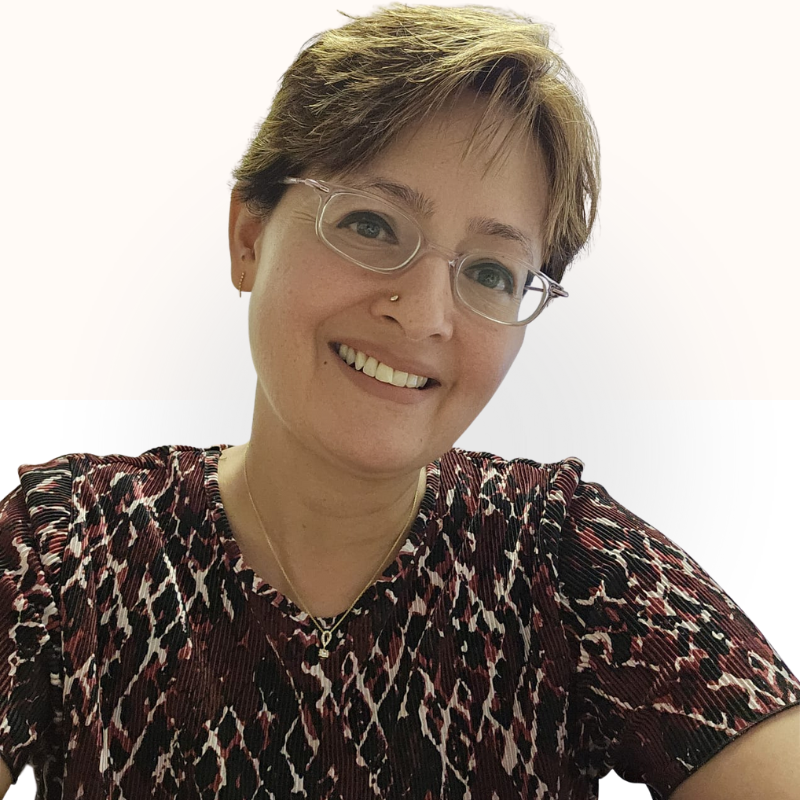
Shabs has a captivating story of struggle and liberation. Today she shares about leaving an abusive marriage in Pakistan, fighting for her rights, losing and recovering custody of her children, wrestling with her Islamic faith, and finding the truth about her own essence—and everyone else’s. As it turns out, we’re all the same.
Listen to full episode :
Transcript
Okay, welcome back to season three of Barely Christian, Fully Christian. I'm Anni Ponder, and I'm super grateful to have the gift of your attention and time.
This season, we're diving further into conversations about what it means to love Jesus, to call Christianity to be better than it is and a whole lot more like Jesus, and to embrace the feminine aspects of God. I'm so glad you're here.
If you happen to be tuning in for the first time to Barely Christian, Fully Christian, may I suggest you actually go back and start with episode zero.
There's a lot of information in there that will help lay the foundation for the conversations currently ongoing. Not saying you have to go back and listen to all the episodes in between, but that would be a really great place to start.
Okay, my people, looking around at what's happening in the world at this moment, it's easy to feel overwhelmed and maybe more than a little bit terrified. Today's conversation gives me so much hope and courage.
I'm talking with my new friend, Shabnam Naz Ansari, whom I met in a Zoom class last year for theology. I'm so excited for you to get to hear the love and wisdom coming from this woman. Shabs has an incredible story of liberation.
First, finding your own freedom and now supporting so many other people. Her life is a brilliant inspiration to me and I know you're going to love her as much as I do.
And also, if you have ever been worried that Islam might be a dangerous religion that wants to destroy everyone else, stay tuned. Shabs has some great news for us all. Oh, my friends, I am thrilled to invite you to hear a conversation today.
My guest is Shabnam Naz Ansari, and I will let her introduce herself to you in a moment. And I am so, so, so excited because what she loves to talk about and do in the world is exactly what I love to talk about and do in the world.
So we're going to have a conversation about interfaith and all of the justice work that comes out of that. But let me tell you how I know this woman. We've only just met, and I feel a direct kinship already.
My teacher in one of my classes last year, I believe it was for the course called Peace and Violence in the New Testament, invited her to come on and meet us and share with us from her perspective, of her lived experience, the studying she has done
and the work she does in the world, what it means to be a true follower of love, in essence, and what that means for her and how she shows up in the world. And so when she began talking, I immediately wanted to sit down and have a cup of coffee with
her. And so this is virtually that across the time zones. And so I am so excited to welcome you all to hear this conversation with my new friend Shabs. Shabs, welcome.
Thank you, Anni.
Thank you so much. I'm truly honored to be here. And not only that, that I really thoroughly enjoyed the session that introduced the both of us, but immediately, even during the session, I can feel a direct connection with all of you.
And afterwards as well, when I was talking to you, as if I could see so many of myself, many aspects of myself in you, as if I am really talking to myself in one place.
So that's how, and I mirror your feelings in terms of, really, I feel so strong a connection here.
Wow. Okay. Remind me at some point in this conversation, I'm going to put a pin right here to tell you about what my word of the year is.
I do this practice every year where I select a new word and kind of invite it in, and it relates to exactly what you've said. It's so fascinating how this shows up.
So by way of allowing my listeners to come close to who you are, kind of knowing a little bit about who my listeners and I might be and the things that interest us and we want to talk about, who are you in the world, Shabs?
4:33
Divine Essence
Really?
This is such an amazing question, right? Because whenever we ask anybody who you are, we tend to focus on many aspects, right? And many aspects of those personality is all which is for earth use only, right?
Which we call as ego, the way we are recognized. It can be my name, which is Shabnam or Shabs. It can be the religion that I was born into, which is the religion of Islam.
It can be what I'm doing right now, which is the founder and the executive director of a federal registered Canadian charity. It could be the gender, which is a female.
It could be all the accomplishments of my past, past, my God, almost over 50 years in this world, which spans four continents and four industries, all across, and then I set up first, a for-profit organization from scratch and then a non-profit
organization from scratch. It also can be personal in terms of me being mother, biological mother of four children and a parent of one bonus daughter. It can also be my role as a wife. It can be anything.
So if I were to really define me as more authentically, I am nothing if I am not the essence, if I am not the reflection of the divine essence that is there in each and every one of us. That is where we came from. That's where we are going.
And that is one thing that connects me with each and every one of you. So I hope I've given a brief introduction of myself.
I love this so much because we are not one thing. We are so many things. And what aspect do you want to hear about first?
It's like, oh, getting to know, you know, an ocean. Like, what part is it? The water or the creatures or the plants or the weather?
What are you? Yes, you are the essence. And so am I.
And so is everyone listening. And that is where we are going also. So beautiful.
Well, as my friends from the Hindu tradition say, the light and the essence in me welcomes and bows to and honors that which is in you. I'm so glad you're here. Thank you for saying yes to this.
Yes, thank you.
Thank you so much for inviting me. I'm truly honored and humbled. And it's a great pleasure to be here, really.
Well, I tell you, the moment you came on the screen in our Zoom meeting and Bradley was like, this is my friend Shabs.
And she does in her faith, justice work and blah, blah, blah. And I saw your face. I heard your voice.
And I felt the warmth coming from your heart. I was like, who is this woman? And how can I get to know her right now?
And part of this is if I look at myself right now, part of what I am is all of what I've gone through.
Right. I would not be the way I am right now, had it not been for everything that I went through. Right.
So if I look at myself and I look at the way I am right now, I have a huge gratitude to each and everything that has happened in my life. So at that point of time, I may have been asking, why me? Right?
Why is it going through me? Why I'm suffering to that extent? But right now, I'm able to connect the dots to a much higher purpose that I have achieved from all of that.
The purpose that I'm living day in, day out, which is to empower individuals, strengthen families, connect communities and unite humanity, is to really focus on our shared values of love, compassion, care, and justice, and really peel the onion away
I'm so glad you brought that in right now because to understand a human, we must understand the context in which we've, what things have led us to hear, and then we can see each other as storied individuals who have made choices and also had to
suffer some things that we had no choice in. But it's our stories that have brought us to this point. Understanding how we got here helps us to have an inroad to now where are we and where are we going?
9:25
Liberation Story
I would love by way of helping people understand a little more about you for people to know about your country of origin, and how you've come to live in Canada, and as much of that story as you'd like to share, so that it will provide some context
Yes.
I was born and brought up in a country called Pakistan. Most of the people confuse us Pakistanis with Indians, but that's where we are.
Culturally, we are very, very close with each other in terms of being the same, speaking the same language, behaving the same that we do. That's how I was born and brought up in.
And through, I graduated from one of the most prestigious business schools. In my city and have been working at that point of time when I was in Pakistan for the last, oh my God, 20, 10, 15, 15 years already.
Okay.
15 years already when this was happening. So on the, I have quickly and slowly gradually climbed the, the ladder in terms of my professional career, because on the, on the personal side of thing, I was in an abusive marriage.
And it was a 13 year long abusive marriage in all its shapes and form. And it was because of that abusive marriage that I put all my attention and focus on my career growth.
And it was because of this that I was only one out of four women in a room full of over 30 senior executives in those point of time.
I was, I was senior vice president at the second largest bank in my home country, looking after the country wide over 12,000 branches of the bank at that point of time. So that was my professional growth.
On the personal side of things, I was a mother of two girls and a boy, three children. My eldest was 80 year older at the time. And I was not able to get out of that marriage because of the culture, the culture that I grew up in.
So much so that as per my family, I could only walk out of that marital home in the form of a dead body. That was the culture that I grew up in.
And the first time ever that I got a little bit of a strength to try something, to walk out of that marriage was when my eldest, who was 80-year-old at the time, she asked me, mama, why, why are you in this?
And that question really gave me the strength. At times, you just need a little push, right? Yes.
And that push led me to a three-year battle in the court, because what happened was that when I went to seek divorce from the court, the law had just recently changed. So before that, women were not allowed to ask for divorce.
We call it khula in Pakistan. So the law has recently changed because of which, if a woman asked for a divorce, she should be given a divorce in three months' time. But what happened was that the law had changed, the practice did not.
I entered into a three-year-long legal battle in the court, character assassination, end-to-end, family and friends pressure, bribing of lawyers by him.
I had ended up changing my lawyers thrice, and finally had to study the law myself in order to get the divorce from the court.
So at the end of the three-year period, when I finally got the divorce, he applied for the custody of the children through the same court. I was at my weakest. Practically speaking, I underestimated my strength.
I didn't have the strength to go through another court case better. I went to the court, handed over the custody of my children. I was so strongly connected with them.
Oh my God. I'm handed over the custody of the children with my own hands to him. I left the country as a rebel, because that was the start of my breakdown phase.
I became rebellious against the fellow countrymen and women, the system, the norms, the traditions, the values, the culture, the religion. In fact, I put all the blame on the Islam.
I saw all of this was happening because of Pakistan being an Islamic country. And it has, that's what I did. And I remain in that sort of rebellious phase for about five years.
And that was a deep, utter darkness of my breakdown phase. And one fine day, I said, let me just open the book and start reading it. I opened my book, which was the Quran, and I start reading it just for the mindset of understanding it.
And that led me to a period of enlightenment. I became crazy in terms of my research and my study, of not just the holy book, but also in terms of every book that I could find under the sun. Dr.
Wayne Dyer is my role model, is my teacher, is my mentor, is my guide. I listened to every of his speech. I read his books, books like Secret, Bob Proctor, The Think and Grow Rich.
All of these books, I used to study three books in one week. That's crazy. I was, in addition to continuing the research and the study of the Quran.
And I realized that at the very heart of everything, we as humans have complicated our lives. And I'm not just talking about Islam as a religion or Muslims as human beings. I'm talking about us on a general sense.
We tend to divide in the name of the religion. We tend to divide in the name of the divine. We tend to discriminate on the basis of the background or the form.
But at the very essence, the key divine principle is unity. It's unity consciousness. We all are one.
We came from the same source. We're going to the same source. There's the same source in you, the same source in me.
To connect communities with on the basis of our shared values is the one key divine principle. The second key divine principle is us becoming Khalifa.
So whatever we are given, be it in terms of our wealth or money or resources or skills, even our bodies, we're not given as owners or caretakers. We are given as a trust to be spent for the benefit of others.
So generosity from your ultimate true authentic self became the second key principles. And it is on the basis of these two key principles that I build up the charity from ground level up.
The charity started from my sort of purpose that I understood all of this by studying the Quran. So let me ask everybody else to really pick up the book, study by themselves, ignore the hearsay and study it yourself.
Do not restrict it in the hand of the religious leaders. You have been given the brain. You have been given the intellect.
Study the book by the book itself. Just use your brain. And that's what was the foundation of the charity by the name of Vakt, which was World War Worldwide Quran Thinkers.
And that was how the charity was established as a faith based organization. And then later on, we created Vakt Masjid as an implementation arm of Vakt.
The whole idea of Vakt Masjid was to carry out the community welfare activities built on these two key principles. One was being the generous in terms of being the caretakers and the trust.
And the second is in terms of uniting people on the basis of inclusivity and diversity. And these two key principles remain the key principles at the volunteer well as well.
So later on, we entered into a detailed discussion with the charity's directorate to change our classification from a religious organization because we were never a religious organization.
We were a faith based organization, but there is a difference between a faith based organization and a religious organization. And somehow it's so difficult to explain it to anyone under the sub.
Therefore, we converted it to a community welfare organization. But our two arms remain the same.
So what, as in quranthinkers.com still continues, and the volunteer will continue separately because we do not want to side with any religion under the sub. These are the two.
In terms of my children, I kept on fighting for the custody of the children sitting here and fighting the custody court case battle in Pakistani court. Got them reunited with me after eight years.
My eldest is 27 now, my younger one is 25, son is 22 year old, have got a bonus daughter, a 24 year old lovely girl, and the baby child of a family, an 80 year old. So in terms of my life, I'm living the dream life. Yes.
But through all of my life suffering, this is what I've reached as my life purpose, which is to connect community so that no one feels isolated, no mother has to go through what I went through.
There is so much in each, in each chapter of the story that you have just kind of given us the overall summary that I can relate to and that I hear and think, oh, wow, I really understand some of that.
I mean, obviously, our cultural backgrounds are very different, but I really understand. First of all, a question coming to you in the form of your eight-year-old child saying, why?
And that question sort of, to me, what I hear is it kind of triggered like, oh, yeah, let me think of why, why am I still allowing this to happen? Do I have agency? Where do I have agency?
And how will I exercise it? Because she's right, this is not okay. I have been guided by questions more than almost anything in my life.
And so I have a deep respect for the questions that allow us to shake off our old paradigms and find our way into the new ones. So that's one of the most precious parts of your story to me, is that question waking you up into this.
Also in terms of children, right? Because when we are born, we are born with the purest of the essence, right?
We are born with the feelings of love and connection and curiosity for knowledge and the seeking of knowledge and the ability to side with justice. So all of those things that we call innocent are basically the real essence.
So any question that comes to us from children are full of wisdom.
Yes.
It's something because of the passage of time, we as human beings, we divert away from our essence. At times, we need to bring us back to the purest of the pure form, and that's why we can learn so much from children.
That's right. Because they haven't yet internalized all of this messaging that I'm different from you, and what divides us is really so important, and mine is better, whatever it is.
I was actually just thinking this morning as I was preparing for this.
There's a story in the Old Testament, you've probably heard about it, where the Israelites are about to be attacked by two or maybe it's even three different armies from different kingdoms coming to attack them.
And the Israelites are afraid and they pray, and then the next thing they know, the different armies who are coming to attack them are now fighting with each other, and they destroy each other completely.
So that the Israelite people look down or wherever it is and see these other armies have killed one another. And they're like, hooray, we've been saved, because these armies became enemies to each other and fought each other, and now we're saved.
And I was thinking about that, and there's a whole lot to explore. And I, you know, I always have to say like, oh, the violence, can we find better stories now?
But I think that really illustrates something profound that people like you and me and so many others are trying to change, which is the best way to deal with the others is to have them fight each other and be divisive and then they'll destroy one
another. And I see that so much in the world where there's all this focus on how we're different and it and it feels like a purposeful divisiveness to get us to fight with one another because then we're a neutralized threat.
But if humanity could recognize our unity, our shared essence, our usness, then we wouldn't tolerate the things that we tolerate because we would see our sameness to one another.
Yes. And from the times in Memorial, the essence of us as humanity has always been the same. Our leaders have worked on divide and rule concept.
And these leaders, you can be political, can be religious.
If you look all around the world, there was a very interesting Facebook post that I came across and I keep on quoting that Facebook post, which says that there are over 5,000 gods in the world right now.
But you should not worry, only yours is the right one. And that's what's so strange about this, because at the heart of everything, we are same. We are exactly the same.
The idea of people trying to create a divide, trying to create a differentiation, trying to create an exclusion of one individual or one nation at the cost of another is only in order to gain their own self-interest, is to gain power or dominance.
And we as humanity are much better to see through that and to look at the beauty that is inherent in each and every one of us.
Oh, absolutely. With all my heart, yes. The sameness of all of us, in fact, I'll tell you now, so that my practice every year is to adopt a new word.
And this year, the word is same for three reasons. One, so that I can continue to focus my awareness on how you and I are the same. We are made of the same thing.
In my cosmology, when God created the world, they, because it's a plural god in one, right? Elohim, okay, gets down in the dirt, creates humanity, and we are all made of the same good stuff. So none of us is made of something other or foreign.
We're all made of the same thing. Then I like to think about how there's a part in, might be the Hebrew scriptures, might also be the Christian scriptures, Old Testament, New Testament, where God says, I'm the same yesterday, today and forever.
And when I read that, I go, yeah, but if I read the Old Testament, you seem awful, right? But I have to remember that love is always the same. It might be the storytellers who have a problem.
So I can remember that God is always love, always, always love. And then the third iteration of this for me is, I spent part of my young adulthood learning Spanish. And so in Spanish, the word for myself is my same.
It's mi misma, right? And I really love this concept of becoming only that which is truly me and not being anything else. And so being my same helps me to remember that, oh, this thing I might try, but that's not really me.
I'm going to just ask what is truly my same. And so for these reasons, I am really listening for the word same in conversation this year. And I just hear it all the time when you speak.
27:19
The Ruh Connection
No, Anni, it's too profound.
It's such a beautiful choice of the word that you did and the way that you are manifesting it in three different versions. And that's amazing. One of the things that you mentioned about about the God or the essence being the same in all of us.
And I would like to incorporate what I understood and what I research from Quran. There are two words that I mentioned in Quran. One is the rule of Allah and the other is fitrah of Allah.
Right. So fitrah of Allah are the basic characteristics that we are born with.
So fitrah of Allah are those characteristics that the essence that makes the essence such as unconditional love, care, compassion, justice, curiosity for knowledge, being a learner, seeker, right?
These are the characteristics that the essence is made of, which is love and light at the very basic root. The rule of Allah is what is the final part of our creation.
So the final part of our creation is that our bodies were made as a physical bodies, just like all of us. But at the final part is the spirit being injected into us, which is the rule of Allah.
And the rule of Allah is the same in you as it is with me. You cannot differentiate one rule that is in you from rule that is in me because it's all the same.
It's just like people cannot differentiate how you can disconnect the air in that room from the air in this room, or how you can disconnect the energy that is lighting this bulb from the energy that is running the fan.
How you can never disconnect because the energy, the source is the same. It's not disconnected. It's the same.
It is strongly connected. So, for instance, at the time of my death, the Ruh of Allah will leave my body. I'll weigh exactly the same way, just seconds before and after my death, but it will only be the Ruh of Allah that would leave my body.
So the Ruh of Allah is what makes me alive. Ruh of Allah is through which I'm connected to you. It's the same.
How do you spell Ruh?
R-O-O-H.
Okay.
Because we talked about this briefly in that class, and then I went on a little dive because I heard you say that, and I went, wait a minute, because I'm fascinated by the word Ruh in the Hebrew, because that's the animating breath that God breathes
into the dirt human, Adam, right? And so I went down and I actually had a conversation with ChatGBT and I said, so I've just learned that this word exists in the Koran as like the animating spirit of God. Here it is in the Jewish scriptures.
I'm a Christian and I'm learning about this. Is this everywhere? And we just haven't known?
And it's like, yeah, it's all over the place. The spirit, the breath, this Ruh, this Ruach is what connects all of you.
You know, Anni, it's not just this. It's not just this word. It's each and every word of the Kitab.
So when Quran says the Kitab, it is actually referring to the laws that have been Qutba, that have been made Bedei tree, to everyone.
So whether you belong to a nation that was living millions of years back, or thousands of years back, or whether you're living in the time right now, or whether you'll be living later, in any time in the future, you are given the same Kitab.
The laws of the divine, the laws of the essence are the same.
Yes, just the same.
It's only the manifestation of the particular Rasool, of the particular messenger, the language of which is adopted for that particular region. So I'll give you one example.
One of the ayahs that keep on bothering me, even when I was going through the 13-year-long abusive marriage, was that whenever I used to go to my parents to say that my husband is doing this or my husband is doing that, and they would say that God
has given him the right to beat you if you are disloyal. And this is what the ayah is saying as to Quran. So even if he has an iota of a suspension, if he suspect that I am going to be disloyal, he has been given the right to beat me up.
And that is the right that God has given to you. So how can you say that this is not okay? And this was the ayah that kept on me on my toes.
And this was the first ayah that I aimed to really reinterpret and understand. And the first word in that ayah was that the men are the head of the household. That's how it has been mistranslated.
And this is something that the mistranslation is there.
If whatever religion I pick up, whatever religion I pick up, this is the concept that had been inculcated into the mindset through the misogynic patriarchal-based translations of their respective holy texts.
So it is the patriarchy that has invaded into the religious text through the misinterpretations, because of which the men and the males have been given a higher status, and the females and the women has been given a second level or lower status.
It's because of this that we can never refer to the divine as she, in spite of the fact that I feel it is the feminine energy that is more obvious when it comes to the essence, the divine. Right?
Yes.
And it's so fascinating that you, looking through your lens of Quran, me looking through my lens of Hebrew scripture, and then Christian scripture, I'm like, wait a minute, I think it's actually, I think the essence and the truth behind what was
written down is much, much better than what's come through the words that were chosen by specific people with a specific desire, working for patriarchy, whether they knew it or not, and how they have mistranslated, hidden things. I mean, I was going
to ask you this question because looking at the holy Bible, I'm like, oh, there are so many places where it's been, you know, parts have been removed and it's been translated poorly. And is the same true of Quran?
Yes, exactly. Exactly. So for instance, if I look at the basic idea of the Quran, and the more I'm studying the Quran, the more I'm researching on the Quran, the more I'm convinced Quran is gender neutral.
It talks to all gender. There is no possibility of the divine to give you birth as a specific gender and then sort of reprimand you based on that. That is not the possibility.
It's the same laws that are applicable to you regardless of your gender. Because these are the divine laws. We're not talking about a man-made laws.
We're talking about, imagine even man-made is man, right? Because it's, it's petro.
My language is so gendered. It's so gendered.
Gendered. I was trying to reword the word man-made to human-made. And then I realized, no, most of these are man-made.
Because most of these are patriarchal, right? These are patriarchal laws. So, but if you look at the Quran, there's no possibility of the divine giving you one ayat where Allah is saying that husband and wife are like or couples.
Allah does not even use husband and wife. Allah uses zod, zod means partner, zod means couple, zod means any aspect without the other aspect remains incomplete, such as day and night, such as darkness and lightness.
So you cannot have lightness without the darkness. So the concept of zod is having one unit, one entity. It's like that, and it does not matter on the genders.
So Quran tells us that the concept of zod is one of the ayat of Allah. It's one of the divine signs because Allah has inserted the concepts of rahm and rahmat. And it's again, the concepts of rahm is from us as, it's basically the mother's womb.
That's what I was going to ask because in Hebrew, it's rahm, it's womb.
Yes, exactly.
The mother's womb during pregnancy. So even the concepts of rahm and rahm and rahmat is all from the mother's womb. It's source of nutrition, of lifeline.
It's a source of unprecedented growth and development. It protects and shields the child from anything that can harm the child. Right?
So it is a source of rahmat. A zhawj is a source of rahmat for their zhawj. So in one ayat, Allah would say that the zhawj are like my ayat.
And in another ayat, Allah would say that if a husband suspects that a wife would be disloyal to him, he should beat her. You need to ask these questions and really say that one ayat from the divine can not contradict another, right?
There's no possibility for any contradiction, right? So this is not a possibility. God can never do that, can never ask that.
It's the man who's doing that.
Because God is always the same. Let's keep this in mind. I was just puzzling over this exact same conundrum in the New Testament.
And it's, you probably have heard this, the Apostle Paul says, there's no... Okay, in Christ, there's no Jew or Gentile. There's no slave or free.
There's no male or female. It's all one, right? Unity.
We're all the same. But then he's quoted to have said, well, I don't let women speak and they are, they need to be taught by men and never be... And I'm like, but in another place, he actually says there's no such thing.
And so, which is it? And come to find out, oh, most Biblical scholars say, First Timothy wasn't even written by Paul. It was written after his death.
This was imposed upon us by mankind, trying to impose the rule of the father, the patriarchy, because that's their paradigm. And I care very little these days about like, why they did it and who started it and all of that.
Okay, here's where we are now. What do we need to do to rebalance, get back to that, what is the word, the Zod?
Sorry?
The Zod, is that the word that you were using?
Zod.
Yeah.
Z-O-U-D.
Okay, Zod. Okay. To get back to that space where we are united, we are not all the same in terms of our physiology, but of our essence, our worth, our importance, what we have to bring matters equally.
And so, let's get to that space. I don't even have time for the conversation about who started this. Whatever.
It's here. Let's fix it.
Exactly. And it is so beautiful that the more you are in this space of your essence, the more you are acting as per rule of Allah, right? You're not alone.
You're living in the world of abundance. You're living in the world of collaborations and partnerships. You're living in the world of limitless possibilities.
You're living in the world where there is a success and love and light for everyone. There's so much for everyone and more. You're living in that space, right?
Yes!
So the whole idea of being able to live in the world of abundance by becoming the rule of Allah.
Yes!
Living in the knowledge that it exists, even though we see this paradigm where there is scarcity and separation, but we know that the actual truth is abundance and wholeness.
Exactly.
It's so fascinating to me to hear you say this, coming from your lens with your knowledge of Quran, because it sounds exactly like what Jesus teaches, right?
When he's like, the kingdom that is within you, and it's now and also not yet, and it's coming, but it's also here already, the kingdom of heaven is now. These are the same ideas.
Exactly. And you would not believe it. I was studying recently the beginning ayahs of Surah Al-Baqarah, which is the second chapter.
And looking at the chapter from this lens of the essence, of living in the world of abundance, the very first ayat start with Aamanu with the Ghayb, which basically means seek knowledge, use your abilities in order to be convinced of something that
is not yet manifested. That is hidden right now. So the whole idea is to use your abilities, seek knowledge and be convinced of something that is hidden right now, that is not yet manifested. Strive for it with your whole being.
And the word that is used in the subsequent ayat is Yoke Noon with Akhara, which basically means being certain that what I'm striving for is happening. Right?
That is exactly what you did when back in those years of, how would you categorize it? The years before now. You did that in the suffering.
You knew thanks to your daughter's question, and you were able to remember, to know, to come to, it could be better and different. And you lived into that.
Yes. Yes.
And you embodied that principle.
I embodied that principle in so many ways, Anni, without even knowing. So when I decided that I'm going to go for the khulap, that was the first time. And you would not imagine I had these long hair up until my hip joint.
Because I was a pure hybrid of that culture. I was a pure traditional good human, good wife, good mother. That's what I was.
The moment I decided that I'm going to get out of this relationship, I went to the parlour, I had my hair cut short, and I told to myself, this is a new you and you got this. And I did this every day, every day, day in, day out, even today.
Whenever I woke up, I have built a habit of visualizing what I'm striving for and really living that reality every day in my conviction, in my certainty before I even bring it into reality.
Yeah. So cutting your hair sent your future self this signal, here I am, I'm ready for her to come in.
Yes. Exactly. And this is what we do, right?
We bring on these sort of forms to something that is yet hidden, right? Yeah. I'll give you one example.
I bought myself this gift. And this is a gift that I bought for myself and I wear it daily because I know the vision that I have for the charity right now, which is there for 10 years from now. I'm there already.
So I bought myself a gift beforehand. The more I see it, the more I know this is your kinoon bil khair, bil akhirah. This is going to happen sooner or later.
This is happening, right? So the more I wait and watch, this is happening.
But even then, when I got reunited with my children, and my daughter said to me, when they got reunited with me after eight years, that you're not our mother anymore, it was harsh words coming from her, right?
But I knew that this is built out of those eight years of conditioning, that there was a gap. But I knew I would be back in their life, and I am.
I am back in their life as an inspiration, as a role model, strongly connected to the three children that are really so, so strongly disconnected from me.
Wow. This reminds me of, in my experience, the words, oh, come on, it just stopped. So this is fun.
A little up, a little moment. Lately, I think it's Perry Menopause. I have thoughts, and we're going on the train, and then the train just stops.
It's okay.
We're not at the station.
We're not at any Vista point. The train has just stopped. Something about faith in what is not seen, right?
Really, when you're buying, is it a ring that you said that you bought yourself?
Yes.
When you're buying a ring, when you're cutting your hair, when you're seeing yourself reunited with your children, it might seem to someone looking in like, well, that's not the reality yet, but you know it already is and you're calling it in.
Yes.
46:45
Essence Over Ego
One of the basics of manifesting a life of abundance is twofold. First is that you need to be connected with your essence in terms of your authentic self, in terms of connected with Ruh of Allah, as I call it. You need to be your authentic self.
You need to be the essence of love and light and care and justice and seeker of knowledge for everyone. That's what you need to be. That's the first requirement.
The second requirement is you need to have the faith, the certainty that whatever you're striving for is happening. It's only a matter of time. It's not yet manifested to the world, but it's manifested to me.
It's there.
It is very real. It's very real. We can make it real in our sight by doing things with faith right now.
Yes, exactly.
At times, Anni, we as women, we underestimate ourselves. We follow through this imposter syndrome every day, every point of time. And what I have learned can be a tip for your listener as well.
From my experience is to really distance yourself from those thoughts. Give it a name. For instance, I call my thoughts of who pull me down, who discourage me as Sana.
These are the first alphabets of my name, Shabnam Naz Ansari.
Okay.
Right? I call it, this is Sana. And whatever thought I have, which pulls me down, you can never do it.
You have never done this before. You're not capable of doing this. How can you do this?
How can you talk about doing this? This is what the world is doing. How can you even think about going there when you have never been there?
These are the thoughts that you hear every day, every point of time. But what you need to do is you need to replace these thoughts. First, create a distance.
These thoughts are not of Shabnams, right? Because Shabnam is the Rooh of Allah, right? These thoughts are from Sana.
So, let's create a distance. Yes. And then transform these thoughts.
For every thought, come up with a revise. I have done this. And this is being done.
I can see myself doing it already. I know that this is done, all thanks to the way I am right now. All thanks to the Rooh of Allah that I am so strongly connected with.
Right?
Yes. Oh, I feel like this is what every spiritual teacher in whatever tradition I can read, says. Use your words and your thoughts, align them with goodness and hope and faith, and then watch things prove to you that you are right.
Yes, exactly.
Which is why I am so careful these days.
I was just having this conversation in my kitchen very recently. I'm so careful about the words that I use to describe myself, because I know that I'm listening.
Exactly.
So for instance, in in many iterations of Christian faith, it's a very common thing. I'm sure you've heard it to confess that I am a sinner and I am in need of grace.
And when we say this out loud, it's like we create this reality that this is who I am. And for the longest time, I've pushed back on that and said, hold on, I, my deep self, is listening to the words that I let come out of my mouth.
And I'm I'm almost cursing myself by saying this is who I am. And then I create a self-fulfilling prophecy. And then, oh, look, I do these awful things and I sin.
And it's because I'm a sinner. So I've stopped saying that. And I've instead started saying, I am a beloved child of God.
That's who I am. And then I watch as I prove myself right. And this is not to say I am flawless and I never sin.
This is to say that is not my essence. And I don't even want to talk about what is not my essence. I only want to talk about what I am.
Have you read the book Three Magic Words?
No.
Tell me more.
Okay. Read it. And the three magic words are, I am God.
Okay.
Right?
That's the three magic words. And one of the meditations that I do every morning is, that I know I am pure spirit. I always have been and that I always will be.
There is inside me a place of confidence and quietness and security, where all things are known and understood. This is the universal mind of God. In me and around me, this is what we need to do.
We need to understand that we are the essence.
That's right.
We are the rule of Allah. We are the essence. Right?
Because that's where the major power comes in. That's where the rule of Allah and you gets connected to rule of Allah and me. That's where the essence of you and me are not separate.
They're the same. Right?
When you say this, my whole body responds. I have chills from head to toe. Yes, this is who we are.
All the other separation and violence and hate. That is not who we are. Yeah.
Amen. Amen. Amen.
Oh, so beautiful. So I have a couple more questions that I'm hoping we could look at. And I know which one I want to end with.
So here's where I want to ask next.
As you do the beautiful work in the world of interfaith, justice and service to humanity and the planet, I am sure that you run into the Western mindset often that comes, which is, in Islam, isn't there a mandate that you should kill all the rest of
us? And isn't there violence at the root? And I would love to hear you sort of explore, how do you help people come to see what is the truth about your faith? Yes, so that's what they've been told.
Yes, so the first, the first, the first aspect of this is in terms of the violence that is embedded within the main traditionalist thinking about Islam and about Quran.
And it's everything boils down to the misinterpretation of the Kitab, of the of the Quran.
The term, the term Mushrikeen, as is normally related to non-Muslims or non-believers, actually belongs to Muslims dividing themselves into different sects and groups. It does not in the very first place relates to non-Muslims.
So that is the first point. The Quran talks about shirk or about Mushrikeen or doing of shirk or those who do shirk. Quran is not talking about about non-Muslims or non-believers, as is normally translated.
It's talking about people following man-made laws as opposed to divine laws. So in that respect, whoever is following any man-made religion is a Mushrikeen. Right?
Which basically include people from within the mainstream Muslims as well, because within the Muslims as well, there are many, many sides, right?
As soon as one adopts a way which belongs to a certain, making that person part of a certain group, which is separate than the rest of the humanity, you're following a man-made religion.
Because the Quran and the Divine do not talk about religious rituals. They do not talk about, they do not pertain to the Divine laws, do not pertain to the expression of religious beliefs. It pertains to connecting humanity together at the source.
That's all it pertains to. That's the first thing. The second thing is, when Quran uses the word katal, that is the word that is normally translated as physically killing somebody.
Quran is not using the word katal in the meaning of physical killing at all, but in terms of metaphorically, in terms of killing the confidence, or providing ways and means so that that particular act is no longer there.
So the whole idea of katal, the mushriqeen is not about physically killing the non-believers, but talks about doing things which would kill the act of shirk, right? So for instance, Quran used the same word for parents katal their children.
In fact, the exact ayat is that these shirkah, the religious leaders who they are following by doing of shirk, whose manmade laws they are following are termed as shirkah, right? Because they are doing shirk.
They are following their laws instead of the laws of the divine. So the exact ayat is these shirkah have made the katal of their children pleasing in their eyes. So no parent would ever physically kill their children.
No. But what they can do is, they can make sure that a five year old girl is covered head to toe in burqa, right? Or an eight year old boy is not able to pursue his music passion, because music is haram in Islam, right?
That's what they say. Or the hair of a female should not be obvious. That's what they say, right?
Through these manmade laws, they cut their own children, which basically means they block the sources of personality and character development for their own children, right?
So the idea of making Islam a violent religion is built upon these mistranslations, misinterpretations. This is not what the Quran is saying at all.
Tragic mistranslations.
Tragic. Really tragic.
I mean, I'm just sitting with the amount of bloodshed and violence that has been done because of this mistranslation.
Yes, yes. And from your perspective, it might not be as tragic as from my perspective, right? Because from my perspective, look at everything that's happening in the Muslim world.
Look at everything that's happening in the Muslim countries, right? Look at the state of law and order situation, the concept of suicide killings or Muslim suicide killings. The concept of being under Islamophobic attacks, right?
It's just like I'm looking at all of them. It's just like you're looking at your own house or tired and you feel helpless, right?
Because from my perspective, I'm on this side of the things when people are, when people think about all of these things against Muslims, I am one of Muslims, right?
So when I was running this charity as a faith-based charity back in the day, people would approach me whether those are from the Western world, whether those are from non-Muslims or whether those are from Muslims, in equal dislikeness.
So non-Muslims would look at me as if, again, another Muslim, right? Who is portraying their own religious activities. Muslims would look at me as that you are a Kafir.
This is not how a Muslim should be. Imagine, I have my hair short, right? I am a non-Muslim, right?
So I was equally reprimanded by both Muslims and non-Muslims alike.
You're getting it from both sides, all sides.
From all sides, yes.
It's so deeply painful to think about the heart of the divine, of God, of our essence, being all love for all of us, and then watching us twist and manipulate and shatter and separate words and concepts into tiny bits that become daggers in one
Exactly.
And we're all meant to be...
I don't even have words. I've just...
Yes. And ever since, I have been working here as a founder and the executive director of this federally registered Canadian charities. I have faced lived experience professionally, as well as personally.
Even my daughter has been bullied at school. Again, we focus on things that do not matter. The color of the skin, the religion that we follow.
We focus on all of these forms as humanity, and we go and we ignore what is the essence within all of us. And we subject each other to such, I would say, torture.
It is torture. It is. And it grieves the heart of God.
And that I know I can say because I am connected in my heart. I am made of the same thing. And my heart weeps to think of the separation that we believe is real.
That is not real. It's an illusion.
It's an illusion. Oh, exactly.
And yet here we are. And you and I know and so many other people know that when we call to our minds a vision where this gets healed, then we begin to help it happen.
And so here you are doing such beautiful work first in your own heart to restore the unity in your own heart, and then with your children, and then in your community, and then in the businesses and the charities that you oversee, and then in the
Likewise, Anni.
I'm so humbled. I'm so honored. It's such a great pleasure to be here, really.
I feel such a huge connection with you. And with everyone, definitely.
Right? Right? Beautiful.
Well, here's my final question. Unless you have anything that you wanted to bring into this conversation before we wrap up, was there anything else that you wanted or hoped to say?
Yes, just one thing based on your last question.
Okay.
As, and this is just one ask from your listeners and from everyone who's listening to us right now.
Yes.
Is that whenever you are about to act, do, plan or think anything, anything at all under the sun, think if it is coming from the essence or if it's coming from the ego. That's all.
If it is coming from the essence, if it is coming from your source, if it is coming from, if just ask you a question, is this how the essence behaves? Is this how my source would say, do, think, plan or act? If the answer is yes, go ahead and do it.
If the answer is no. Reflect.
Beautiful wisdom there. Yes. That goes along with some words that have come to my awareness that I would like to make into a song.
So I'll just put this out there and let it be, manifest however it will. If love were my only goal, what would I do?
Love and light. That's all the essence is. Love and light.
Then like that's all there is.
That's right. That's the truest truth. Well, my last question then for you today, and I would love to continue the conversation, and may it be so that we meet in person someday.
So today's question, final question is this.
If you could imagine going back and visiting with the woman who was in her 13 year suffering marriage, and see her face, and accompany her, what words would you offer her then, that also you would think would be useful to offer now, as our world is
suffering, is in a terrible marriage, to a terrible idea that we are separate, and we can harm one another, and it doesn't harm us. What words would you leave us all?
Yes, if I were to go back in time to that person, who was going through a 13 year long marriage, abusive marriage, I would identify and ask her to identify with the essence, with the source of Allah.
I would ask her to identify the limitless power and strength that she has, and based on which she would never have gone ahead and gave up the custody, because that led to eight years of life, of suffering for the children, which they did not deserve.
They went from one home to another, they went through all of that. And not only during those eight years, even if I were to look at those 13 years, had I gone out of those abusive marriage, as soon as I had my last child, my son.
Yes. They were the problem. Because we would have had and not have those children.
As far back, I would have these three children, because these are my lifelong treasure.
These are everything that is me. I would go back to the time when I had him, and then I would have gone out of that marriage right away. But again, if you look at the timings, the law would not have changed by then.
So practically speaking, if I look at everything, the only thing that I would change is not giving up the custody of the children.
Yes.
Right. And realizing my own strength, realizing my own power, realizing the potential that I have, and not underestimating the strength that I have. I would have kept them with me.
And but again, I would not have gone out of that country then. And it's just one of more things, but I could have kept them with me.
So what I really hear you sitting with, then, is knowing that the event unfolded as they did and have led you here. And so to change the actual events is a fruitless exercise.
But you would offer yourself in those dark days, the knowledge that you have strength, that you have worth, you are connected to all that is, you are essence in your essence.
Exactly.
And therefore, take heart, beloved, it gets better from here. Yes.
And this is something that I know now, that I didn't know back then, that no matter the undesirable situations or challenges that come into my life, they are all illusion because they can be nothing like an undesirable situation or a circumstance in
the mind of God, which is in me, around me, and is always serving me. That's what it is. Nothing else. Nothing more.
There is a Christian scripture someplace that I won't be able to tell you where to find it.
But one of the translations that I read at one point, at a moment when I really needed some hope, said, it asked this question, how could anything be lost in God? And that filled me at that moment when I was really in turmoil with such deep peace.
Oh, yeah, nothing is, nothing can be lost in God. God is all. Okay, I can then stop worrying and instead make space to see and envision what is already coming and help it be here now.
Yes.
Yes.
Yes.
Oh, what a session, right? Thank you.
Thank you. Thank you. Thank you.
I am so honored to sit around your light and hear from you and learn from you and be encouraged by you and remember who I am as you speak of knowing who you are. Thank you, Shabs.
Likewise, Anni.
Thank you.
Thank you so much. I feel honored. I feel such an immense pleasure and joy and love and light.
And love.
Love and light to you.
Yes. To you. Namaste, really.
Namaste.
Thank you so much for listening. Let's connect. I'm always happy to hear from my listeners and readers.
You can find me at barelychristianfullychristian.com. And now for more of my favorite song by Wyn Doran and Paul Craig. Please enjoy Banks of Massachusetts.